
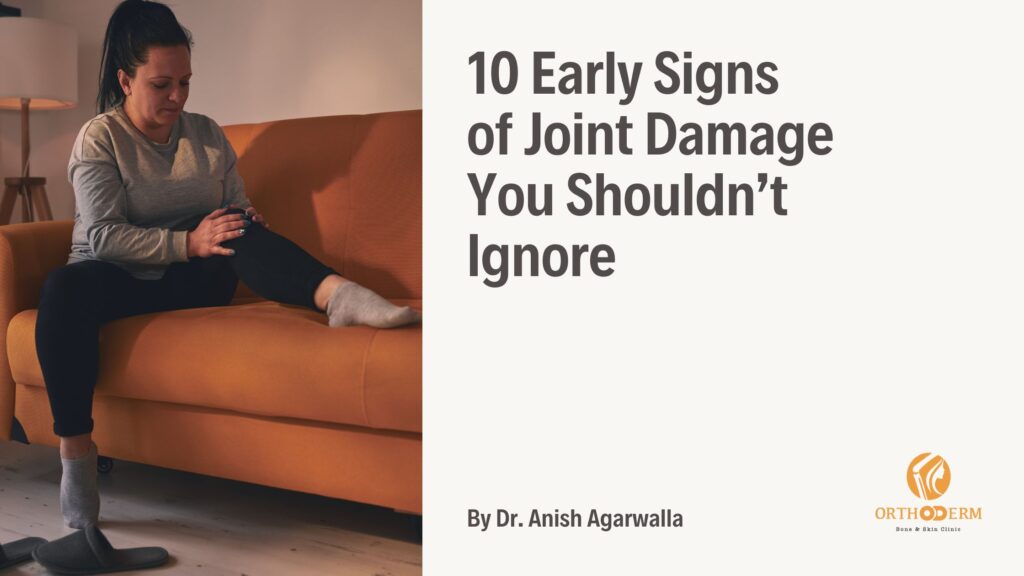
Joint health plays a crucial role in our mobility and quality of life. Unfortunately, many people in India tend to ignore early symptoms, assuming it’s “just age” or “a normal ache.” However, persistent or recurring joint pain can often indicate early joint damage — a warning that your joints need attention before the condition worsens.
According to the Indian Journal of Orthopaedics, nearly 22% of the Indian population suffers from some form of joint disease, and knee osteoarthritis alone affects around 28% of adults over 40.¹ Early detection and treatment can make a significant difference in preserving joint function and preventing disability.
Normal Ache vs. Early Joint Damage
It’s normal to experience mild discomfort after prolonged activity, standing, or exercise. Such pain usually fades with rest and doesn’t interfere with daily work.
However, early joint damage presents differently — the pain lingers, worsens over time, or comes with swelling, stiffness, or instability. Recognizing this difference can help you seek timely medical advice.
Let me take you through the ten early signs of joint damage you shouldn’t ignore.
1. Persistent or Recurring Joint Pain
- If you experience pain that lasts more than a few days or keeps returning, it may be more than fatigue. Persistent pain can indicate cartilage wear or early osteoarthritis. Simple rest or home remedies might not help because the underlying tissue damage continues.
2. Morning Stiffness or Stiffness After Rest
- Feeling stiff for more than 30 minutes after waking up or sitting for long periods is a classic early sign of inflammation in the joint. Healthy joints usually loosen up within minutes of movement. Prolonged stiffness suggests that the joint lining or cartilage is being affected.
3. Swelling, Warmth, or Redness
- A healthy joint doesn’t swell unless there’s an injury. If you notice puffiness, warmth, or redness around a joint, it could indicate inflammation, fluid buildup, or infection. Chronic swelling is often one of the earliest indicators of arthritis or cartilage damage.
4. Reduced Range of Motion
- When you find it difficult to bend, straighten, or move a joint as freely as before — such as sitting cross-legged, climbing stairs, or squatting — it may mean your joint surfaces are deteriorating. In India, many people notice this difficulty while performing daily activities like sitting on the floor or using Indian toilets.
5. Clicking, Grinding, or Creaking Sound
- Hearing or feeling a clicking or grinding sound (called crepitus) while moving a joint could indicate roughened cartilage surfaces. Occasional clicks can be harmless, but frequent or painful ones suggest early degenerative changes, particularly in the knees.
6. Joint Instability or Buckling
- If your knee or ankle suddenly “gives way” while walking, it may be a sign that the ligaments or supporting structures around the joint have weakened. This instability often results from untreated early damage and increases your risk of falls or further injury.
7. Muscle Weakness or Fatigue Around the Joint
- Weakness in the muscles supporting a joint — especially around the thigh, shoulder, or hip — is a subtle but important sign. As joint health declines, the surrounding muscles may compensate, leading to faster fatigue or noticeable thinning (atrophy).
8. Unexplained Fever or Tiredness Along With Joint Pain
- In some inflammatory joint conditions, such as rheumatoid arthritis, early symptoms can include low-grade fever, tiredness, or unexplained weight loss. These systemic signs are often mistaken for general fatigue but can point toward autoimmune or infectious causes of joint inflammation.
9. Pain During Daily Activities
- When simple tasks such as climbing stairs, sitting on the floor, or getting up from a chair cause pain or discomfort, it’s a clear red flag. These activities require healthy joint mechanics, and pain during movement often signals cartilage thinning or early degeneration.
10. Visible Deformity or Persistent Pain After an Injury
- If your joint appears misaligned or the pain persists long after a sprain or minor injury, it’s important not to ignore it. Deformity or swelling that doesn’t settle could suggest underlying joint damage or early osteoarthritis.
When to See an Orthopaedic Specialist
You should consult an orthopaedic doctor if:
- Pain or stiffness lasts more than two weeks
- You notice swelling, redness, or deformity
- You find it difficult to perform daily movements
- Pain disturbs your sleep or restricts your activities
During evaluation, we usually assess your joint clinically, followed by imaging (X-ray or MRI) and basic blood tests to identify the underlying cause. Early diagnosis allows for non-surgical treatment such as physiotherapy, weight management, or regenerative options before damage progresses.
How to Prevent Further Damage
You can protect your joints by maintaining a healthy weight, performing low-impact exercises, and avoiding prolonged squatting or sitting cross-legged if it causes discomfort. Regular muscle strengthening, especially of the thighs and hips, provides joint stability. Wearing proper footwear and using ergonomic furniture also reduces strain.
Final Thoughts
Joint pain should never be ignored or self-treated for too long. What begins as a mild ache can turn into long-term disability if left unaddressed. If you notice any of these early signs, it’s best to seek a professional evaluation. Early intervention not only prevents further damage but also helps you maintain an active and pain-free life.
FAQ Section
Q1: How do I know whether my joint ache is just fatigue or early joint damage?
- A1: If the ache goes away with rest and does not interfere with movement, it’s likely fatigue. But if the pain recurs, lasts more than a few days, causes stiffness or swelling — I treat it as a sign of early joint damage.
Q2: Is there a typical age when joint damage begins in India?
- A2: While it increases with age, joint damage can begin as early as the 30s — especially with joint-use habits or weight issues in India.
Q3: Do habits like squatting or sitting cross-legged increase my risk of joint damage?
- A3: Yes—those positions place extra stress on joints. If you feel discomfort or limitation during such activities, I consider it an early warning sign rather than a harmless ache.
Q4: If I detect early signs, can I prevent further joint damage without surgery?
- A4: Absolutely. Early recognition allows me to recommend lifestyle change, physiotherapy, strengthening, weight control — many cases do not require surgery when treated timely.
Q5: When should I see an orthopaedic specialist?
- A5: I advise you to see a specialist if you have pain or stiffness lasting more than two weeks, swelling/redness, difficulty with daily movements or a joint that locks or gives way. These warrant evaluation.