Call us at
+91 70020 33804

Why Does My Heel Hurt the Most When I Wake Up? The Truth About Morning Foot Pain
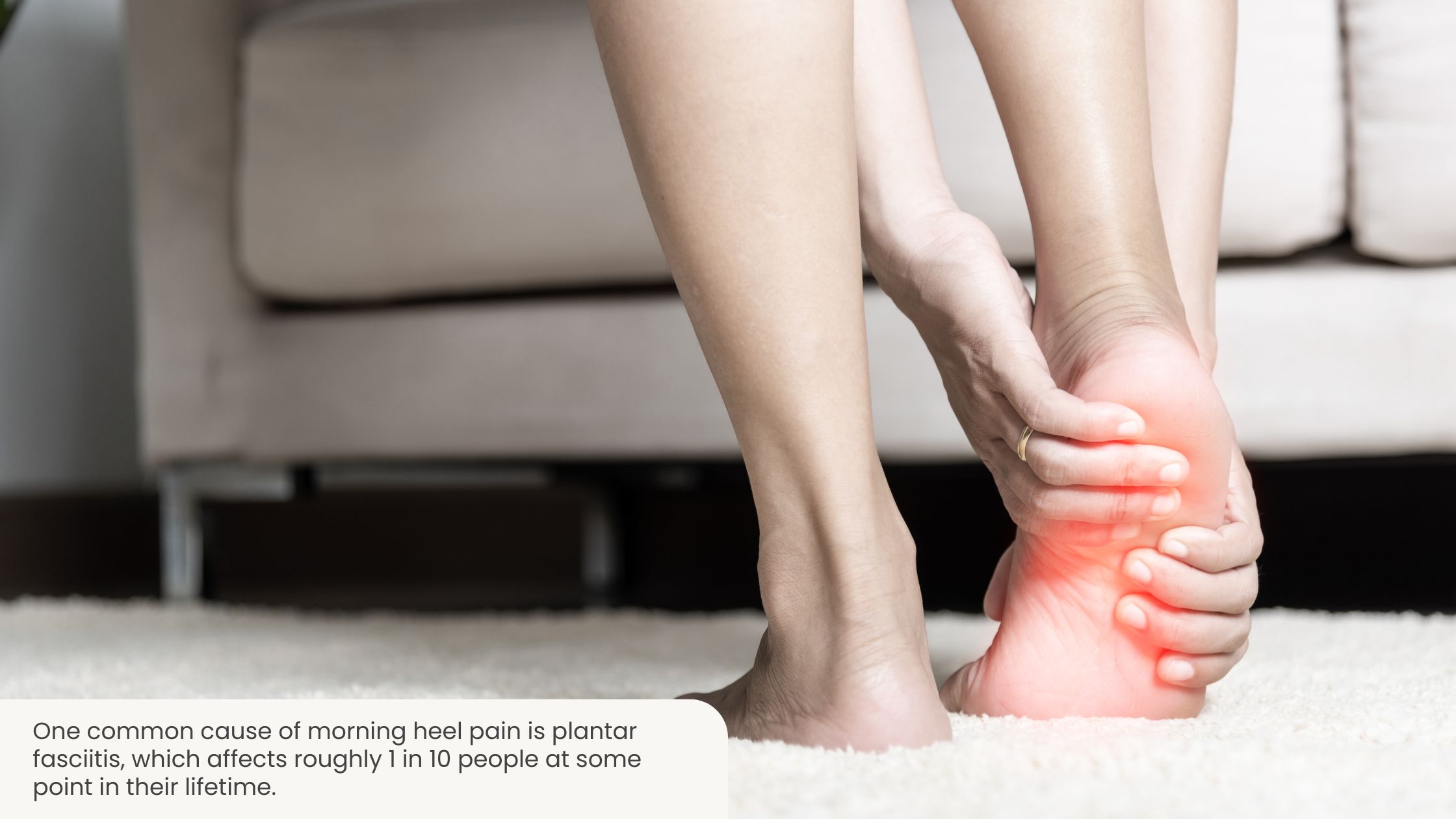
It is a scenario I hear almost every day in my clinic: You wake up feeling refreshed, but the moment your feet hit the floor, a sharp, stabbing sensation shoots through your heel. It feels as though you’ve stepped directly onto a nail or a shard of glass. After a few hobbled steps toward the bathroom, the pain dulls into a manageable ache, only to return after you’ve been sitting for a while.
If this sounds familiar, you are experiencing what we call “first-step pain.” While it is incredibly common, affecting roughly 1 in 10 people at some point in their lives, the reason it happens is often misunderstood.
As an orthopedist, I want to pull back the curtain on what is actually happening inside your foot while you sleep and why your body’s natural healing process is, ironically, the cause of your morning agony.
The Biological “Tug-of-War”
The primary culprit behind this morning ritual is Plantar Fasciitis. To understand it, think of the plantar fascia as a thick, rubber-band-like ligament that connects your heel bone to your toes, supporting the arch of your foot.
When you are active during the day, this tissue endures microscopic tears. Your body is remarkably efficient; the moment you lie down to sleep, it begins a “repair cycle.” It sends collagen to knit those tiny tears back together.
However, here is the catch: We sleep with our feet pointed down. In medical terms, this is “plantar flexion.” In this position, the plantar fascia is at its shortest, most contracted length. Your body heals those microscopic tears while the tissue is in this shortened state. When you take that first step in the morning, you abruptly force that newly healed, shortened tissue to stretch out under the full weight of your body.
You aren’t just stretching the ligament; you are essentially “re-tearing” the repair work your body did overnight. That sharp “stabbing” sensation is the sound of your fascia being forcefully yanked open.
The “Windlass Mechanism” and Your Big Toe
Most patients are surprised to learn that their big toe plays a massive role in heel pain. We call this the Windlass Mechanism. When you take a step and your big toe bends upward, it tightens the plantar fascia like a bowstring to arch your foot.
If your fascia is already inflamed and tightened from a night of rest, this mechanical “winding” creates immense tension exactly where the tissue attaches to your heel bone. This is why the first few minutes of the day are the hardest; once you’ve “warmed up” the tissue and elongated those fibers, the mechanical tension eases.
What Most People (and Websites) Get Wrong
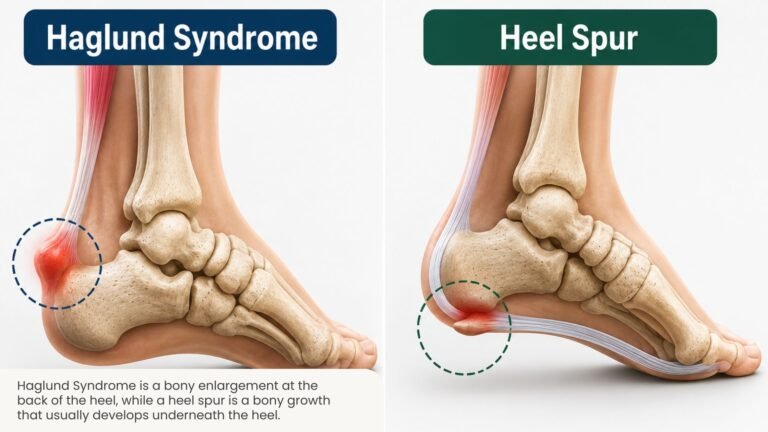
I often see patients who are convinced they have a “heel spur” that is “poking” them. Here is the clinical truth: Heel spurs are rarely the cause of pain. Research published in the Journal of Family Medicine and Primary Care indicates that while many people with plantar fasciitis have spurs, many people with spurs feel no pain at all. A spur is simply a sign that your fascia has been pulling on the bone for a long time, it is a symptom of chronic tension, not the source of the “nail-in-the-heel” feeling.
Another factor often overlooked is Equinus, or calf tightness. Your calf muscle and your heel are connected via the Achilles tendon. If your calves are tight, they pull upward on the heel bone, making it impossible for the plantar fascia to relax. If I don’t treat your calves, I can’t fix your heels.
How to Break the Cycle
To stop the morning “stabbing,” we must stop the fascia from healing in a shortened position. Here is what I recommend to my patients:
- The Pre-Floor Stretch:
Before your feet ever touch the ground, sit on the edge of the bed. Pull your toes back toward your shin and hold for 30 seconds. This “pre-stretches” the tissue so that the first step isn’t a shock to the system.
- Never Walk Barefoot:
Especially on hard floors like tile or marble. I advise wearing supportive indoor slippers with a slight heel lift from the moment you stand up.
- Night Splints:
In stubborn cases, I prescribe a brace that keeps the foot at a 90-degree angle while you sleep. This prevents the tissue from shortening, allowing it to heal at its natural length.
My Final Advice
If you have been suffering from this for more than two weeks, your condition may be transitioning from “acute inflammation” to “fasciosis”, a degenerative state where the tissue begins to thicken and weaken.
Don’t wait for it to “go away on its own.” Most cases of morning heel pain can be resolved with non-invasive biomechanical adjustments.
Frequently Asked Questions
1. Is walking barefoot on marble or tile floors at home making my pain worse?
Yes. Indian homes often have hard marble or vitrified tile flooring, which offers zero shock absorption. Walking barefoot forces your inflamed heel to take the full impact of every step. I always advise my patients to wear supportive, cushioned indoor slippers from the moment they wake up.
2. I have a “heel spur” on my X-ray; do I need surgery to remove it?
Almost never. Heel spurs are common calcium deposits, but they aren’t the actual cause of your pain, the inflamed tissue is. In my experience, once we treat the inflammation and tighten your calves, the pain disappears even if the spur remains. Surgery is a last resort.
3. Why does the pain return after I sit in my office for an hour?
This is “start-up pain.” Just like when you sleep, your fascia tightens while you sit. When you stand up, you are suddenly stretching that contracted tissue. I recommend doing a quick “seated toe stretch” for 30 seconds before standing up after long meetings.
4. Can I continue wearing my regular flat chappals or leather formals?
Flat chappals and unsupportive formal shoes are often the silent culprits. They lack arch support, which puts excessive strain on your fascia. I suggest switching to shoes with a slightly raised heel (about 1 inch) or adding a high-quality medical-grade gel insert to your existing footwear.
5. Are there any permanent cures, or will this pain keep coming back?
Plantar fasciitis is highly treatable, but “permanent” relief requires consistency. If you only treat the pain and ignore the cause, like tight calves or improper shoes, it will likely return. By combining stretching with the right footwear, most of my patients see long-term, pain-free results.