Call us at
+91 70020 33804


Why Are More Young People in Guwahati Experiencing Back Pain?
Back pain is no longer a problem we associate only with older adults.
I see more young people struggling with back pain while studying, working, travelling, or managing their daily routines. For many, the pain starts as occasional stiffness. They ignore it, continue working, and assume it will go away.
But why is this happening at such a young age?
The answer often lies in the way we work, move, exercise, and spend our free time.
How Common Is Back Pain Among Young Adults?
Back pain is common across India. A systematic review of 97 Indian studies found that the pooled prevalence of low back pain was about 48% at a given point in time and 66% over a person’s lifetime. [1]
Research has also found that back pain is common among younger Indians. One study of 1,355 Indians aged 18 to 35 found that 42.4% had experienced low back pain during the previous year. [2]
These numbers show that back pain is not simply an age-related problem.
Our daily habits matter.
Why Are Young Office Workers Getting Back Pain?
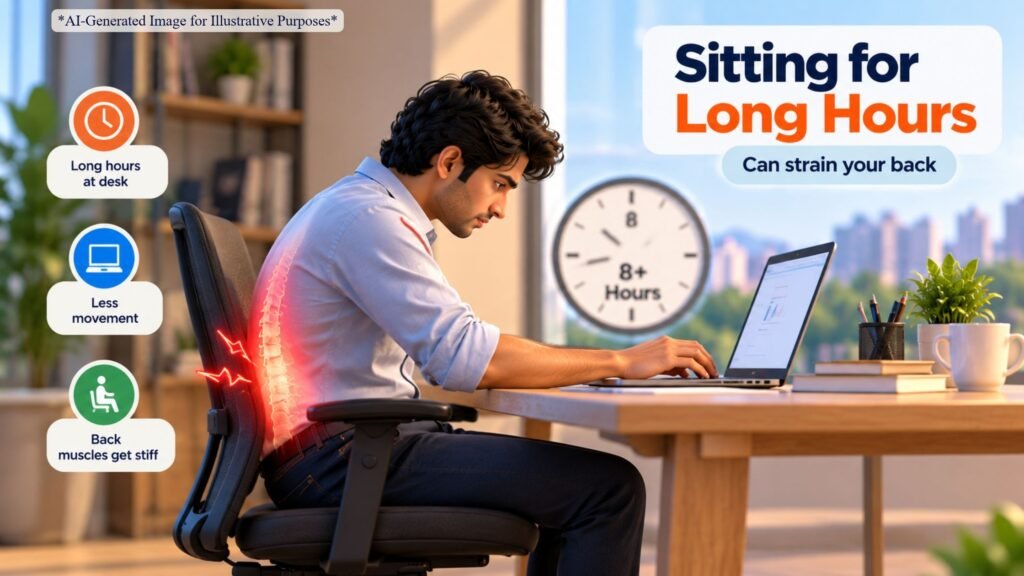
1. Sitting for Long Hours
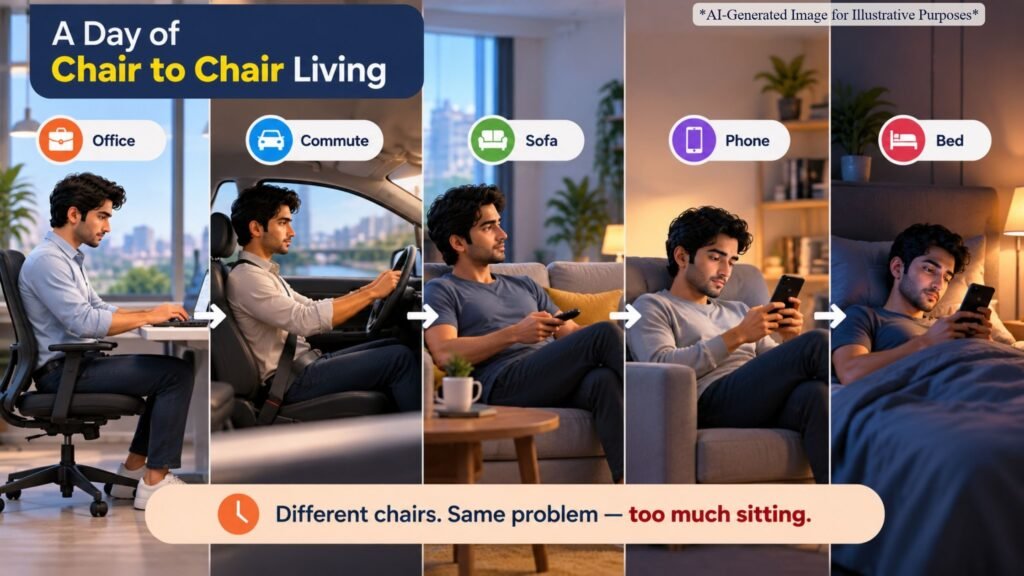
Most office workers spend several hours sitting at a desk. Some continue sitting during their commute and then spend more time on the sofa or in bed using their phones.
The problem is not simply sitting.
Staying in one position for too long can reduce movement and increase discomfort. Research suggests that sitting behaviour, fewer movement breaks, static sitting and poor sitting habits may be linked with low back pain. [3]Your back needs movement. It does not need to remain in one position for hours.
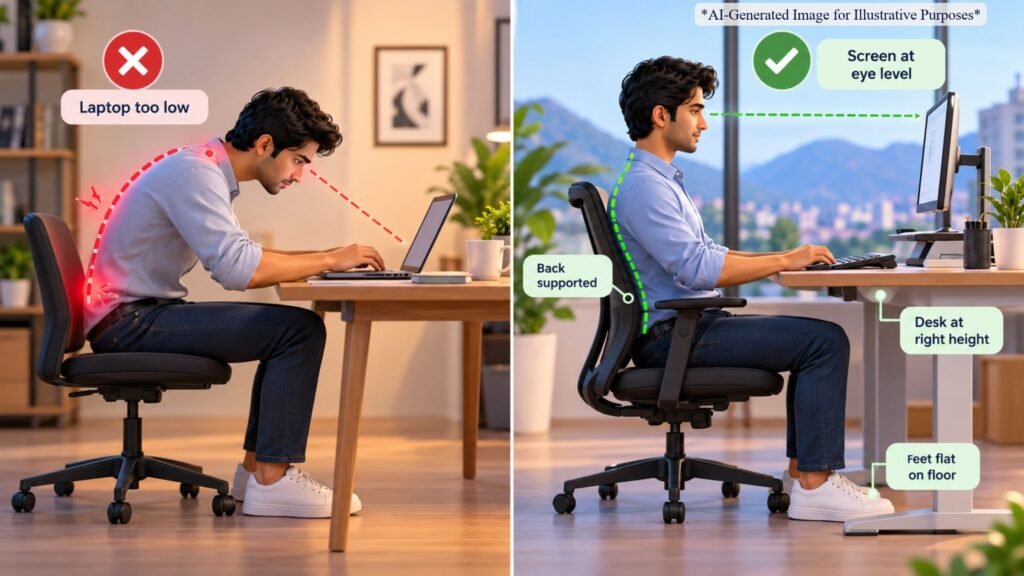
2. Poor Laptop and Desk Habits
Many young professionals work on laptops for long periods.
A laptop placed too low can make you lean forward. Working from a sofa or bed can put you in awkward positions. Sitting without changing position can also increase stiffness.A good chair helps, but it cannot replace regular movement.
3. Too Little Physical Activity
A person may spend eight or nine hours at work and then spend the rest of the evening sitting at home.
Even if you exercise occasionally, your overall day may still involve very little movement.
This can reduce your physical conditioning and make normal activities feel harder on your back.
4. Sudden Exercise After a Sedentary Week
I often see another pattern.
A person remains inactive throughout the week and then suddenly starts intense exercise on the weekend.
This sudden increase in physical activity can place stress on muscles and joints that are not prepared for it.
Exercise is important. But I recommend increasing activity gradually rather than going from almost no exercise to intense workouts overnight.
5. Stress and Poor Recovery
Work pressure can affect more than your mental health.
Stress can influence muscle tension, sleep and how strongly you experience pain. Research among young Indian adults has also found links between low back pain and factors such as stress, job-related factors and physical activity. [2]
Your body needs time to recover from a demanding day.
6. Long Commutes and More Sitting
For many office workers, the workday does not end when they leave the office.
The routine can become:
Desk → commute → sofa → phone → sleep.
This means your body may spend most of the day in low-movement positions.The solution is not to avoid sitting completely. The goal is to break up long periods of inactivity.
Is Your Posture Really Causing Your Back Pain?
I would not blame every case of back pain on poor posture.
There is no single perfect sitting position that you must maintain all day.
Instead, I encourage my patients to change positions regularly, take movement breaks and set up their workstation properly.Research also suggests that frequent breaks from workplace sitting may be associated with lower odds of frequently reported back and neck pain.

What Can Young Office Workers Do?
Start with simple changes.
- Stand and move regularly during your workday.
- Avoid working for hours without changing position.
- Keep your laptop and screen at a comfortable height.
- Do not make your sofa or bed your regular workstation.
- Exercise consistently rather than only on weekends.
- Increase exercise gradually.
- Maintain a healthy body weight.
- Give your body enough sleep and recovery time.
- Pay attention to recurring pain instead of repeatedly ignoring it.
You do not need to change everything in one day.Small changes made consistently can make a meaningful difference.

When Should You See an Orthopedic Doctor?
Not every episode of back pain requires medical treatment.
However, I recommend an evaluation if your pain keeps returning, becomes worse, does not improve, or affects your normal activities.
You should also seek medical attention if back pain comes with leg pain, numbness, weakness, fever, unexplained weight loss, or changes in bladder or bowel control.
And remember: back pain does not automatically mean that you need an MRI. I decide whether imaging is necessary based on your symptoms and examination.
The Bottom Line
Young people are not developing back pain simply because they are young or because they sit at a desk.
The bigger problem is often the combination of long sitting, little movement, poor work habits, inadequate physical conditioning, stress and sudden physical activity.
Your back is designed to move.
If you spend most of your day sitting, start by moving more often.
And if your back pain keeps coming back, do not simply accept it as a normal part of office life. Find out why it is happening and address the problem early.
Sources
- The prevalence of low back pain in India: a systematic review and meta-analysis. BMC Musculoskeletal Disorders.
- Prevalence and risk factors of low back pain among young adults in India. Journal of Orthopaedic Surgery and Research.
- Sedentary behaviour and low back pain in adults: a scoping review.
- Breaks in sitting time and musculoskeletal pain among workers. BMC Public Health.
Frequently Asked Questions
1. Why are young people getting back pain?
Young people are spending more time sitting, working on laptops, using smartphones and doing less physical activity. Poor workstation habits, stress, long commutes and sudden intense exercise can also contribute to back pain.
2. Can sitting for long hours cause back pain?
Long periods of uninterrupted sitting can contribute to back discomfort, especially when combined with poor posture and limited movement. I recommend changing positions regularly and taking short movement breaks during long periods of desk work.
3. How can office workers prevent back pain?
I recommend moving regularly during the workday, avoiding prolonged sitting, setting up your workstation properly and exercising consistently. Do not rely only on an ergonomic chair. Regular movement and physical conditioning also matter.
4. Is back pain normal in your 20s or 30s?
Back pain can occur at any age, including your 20s and 30s. However, recurring or persistent pain should not simply be dismissed because of your age. I recommend an evaluation if the pain continues, worsens or affects your daily activities.
5. When should I see an orthopedic doctor for back pain?
I recommend seeing an orthopedic doctor if your back pain keeps returning, becomes worse or does not improve. Seek prompt medical attention if you develop leg weakness, numbness, severe pain after an injury, or bladder or bowel problems.