Call us at
+91 70020 33804

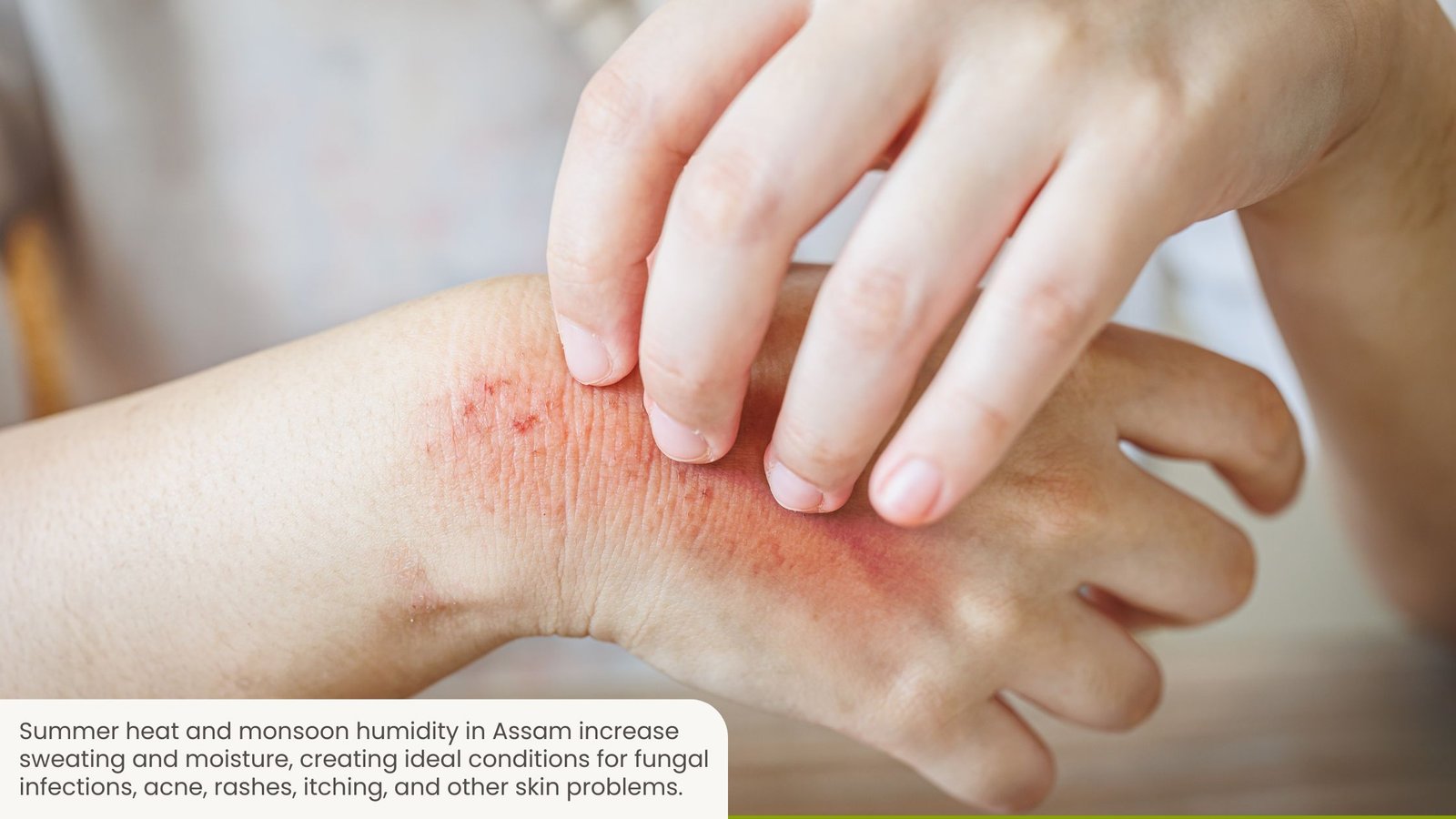
Why Skin Problems Increase During Summer And Monsoon In Assam
Every year between May and September, my dermatology clinic in Assam experiences a dramatic, predictable shift. As the intense subtropical heat transitions into torrential monsoon downpours, my outpatient department floods with patients asking the exact same question: Why is my skin suddenly acting up?
Our region’s unique climate forces your skin to undergo a massive physiological stress test. To help you manage it, I want to unpack the medical reasons behind this seasonal chaos and highlight the specific conditions that thrive during these months.
The Root Cause: The “Sauna Effect”
During these months, relative humidity in Assam routinely spikes between 80% and 90%. When temperatures simultaneously exceed 35°C, our environment turns into a giant outdoor sauna.
Physically, this creates a major problem for your skin barrier. In optimal conditions, sweat evaporates to cool you down. In our heavy air, sweat cannot evaporate; it stays stagnant on your body. This hyper-hydrates and swells your outer skin layer, mechanically blocking your sweat ducts.
Furthermore, for every 1°C increase in skin temperature, your sebaceous glands increase oil production by roughly 10%. This cocktail of trapped sweat, excess sebum, and ambient dust sets the stage for a massive surge in specific dermatological issues.
Which Skin Conditions Spike During These Months?
Data from a multi-year clinical study conducted at the Gauhati Medical College and Hospital (GMCH) reveals that infectious dermatoses rise dramatically during this period, with fungal infections and pyoderma (bacterial skin infections) consistently ranking among the top leading skin disorders in the region.
If you notice changes in your skin during this season, you are likely dealing with one of these primary offenders:
1. Superficial Fungal Infections (Dermatophytosis)
Fungi thrive in warm, dark, damp spaces. The GMCH data shows that fungal presentations make up over 14% of all clinical visits, spiking heavily in August and September. When you get caught in an unexpected Guwahati downpour and sit in damp clothing or wet footwear, you create a literal breeding ground for fungi like Trichophyton rubrum. This triggers painful, itchy conditions like Tinea corporis (ringworm of the body) and Tinea cruris (jock itch) across skin folds.
2. Miliaria (Prickly Heat) and Folliculitis
Because your sweat ducts are physically blocked by swollen skin tissue, sweat leaks into the surrounding layers, causing Miliaria. This presents as clusters of intensely itchy, red bumps. If bacteria or yeast invade these blocked pathways, it progresses to folliculitis—painful, inflamed hair follicles that resemble tiny pus-filled pimples on your back, chest, and shoulders.
3. Inflammatory Acne Vulgaris
The combination of high humidity and heat overstimulates your oil glands. When this excess oil mixes with dead skin cells and environmental humidity, it plugs your pores completely, causing an explosion of deep, painful cystic acne.
Hidden Culprits Most Blogs Miss
While standard skincare advice focuses on washing your face, clinical practice in Assam requires addressing regional factors that standard blogs completely overlook:
1. The Acid Rain and Pollutant Cocktail
In urban centers like Guwahati or Dibrugarh, the first heavy showers pull down trapped atmospheric pollutants and mild acidity. When this mixture dries on your skin, it acts as a chemical irritant, triggering acute contact dermatitis.
2. The “Malassezia” Scalp Feast
High humidity causes Malassezia (a naturally occurring scalp yeast) to multiply rapidly by feeding on your sweat. This triggers seborrheic dermatitis (severe dandruff), which often cascades down your forehead and face as tiny breakouts.
3. The AC-to-Humidity Shock
Walking directly out of a heavily air-conditioned, dry office into the thick, humid outdoor air disrupts your skin’s moisture balance. Your skin barrier becomes confused—feeling greasy on the surface yet fundamentally dehydrated underneath.
My Clinical Advice for Your Routine
To protect your skin barrier, I advise my patients to simplify their care:
- Switch to a Salicylic Acid Cleanser: Use a soap-free, salicylic acid wash to gently dissolve trapped oil and clear out deeply clogged pores.
- Choose Gel-Based Hydration: Trade heavy creams for oil-free, gel-based moisturizers containing hyaluronic acid or niacinamide. Your skin needs hydration, not heavy lipids.
- The 20-Minute Rain Rule: If you get drenched, change out of damp clothing immediately. Wash your skin with a gentle cleanser within 20 minutes to evict fungal spores and pollutants before they settle.
Most importantly, please avoid over-the-counter “triple-action” creams from the chemist. They often contain strong steroids that provide temporary relief but ultimately weaken your skin’s immunity, making fungal infections far worse. If your skin concerns persist, please visit my clinic so we can treat it safely.
Frequently Asked Questions
1. Why do I get small, itchy bumps on my face and body during the monsoon?
I often find that these are not standard pimples, but rather Miliaria (heat rash) or folliculitis (inflamed hair follicles). Our high humidity blocks your sweat ducts, trapping moisture and oil.This creates an ideal environment for local bacteria or yeast to thrive and cause itchy breakouts.
2. Can I skip moisturizer during the summer and monsoon if my skin feels sticky?
I strongly advise against this. When you skip moisturizer, your skin dehydrates internally. To compensate, your oil glands produce even more sebum, heavily increasing your risk of acne. Instead, I tell my patients to switch to a lightweight, oil-free, gel-based moisturizer.
3. Do I really need sunscreen on cloudy, rainy days in Assam?
Yes, absolutely. Up to 80% of harmful Ultraviolet (UV) rays easily penetrate dense cloud cover.Skipping sunscreen on overcast days accelerates skin aging and severely worsens conditions like melasma or dark post-acne spots. I recommend a non-sticky, gel-based sunscreen for this weather.
4. How do I prevent fungal infections if I get drenched in the rain?
I tell my patients to follow the “20-minute rule.” Change out of damp clothes and shoes immediately, then wash your skin with a gentle cleanser. Fungi love dark, wet skin folds, so drying yourself completely and applying an antifungal dusting powder is crucial.
5. Why is my scalp so itchy and flaky during the rainy season?
This is typically driven by a surge in Malassezia, a natural scalp yeast that multiplies rapidly by feeding on excess sweat and oil. It triggers seborrheic dermatitis (severe dandruff). I advise against heavy hair oiling now, as it directly feeds the yeast and worsens the flaking.