Call us at
+91 70020 33804

Acne Or Acne-Like Bumps? Here’s How To Tell The Difference
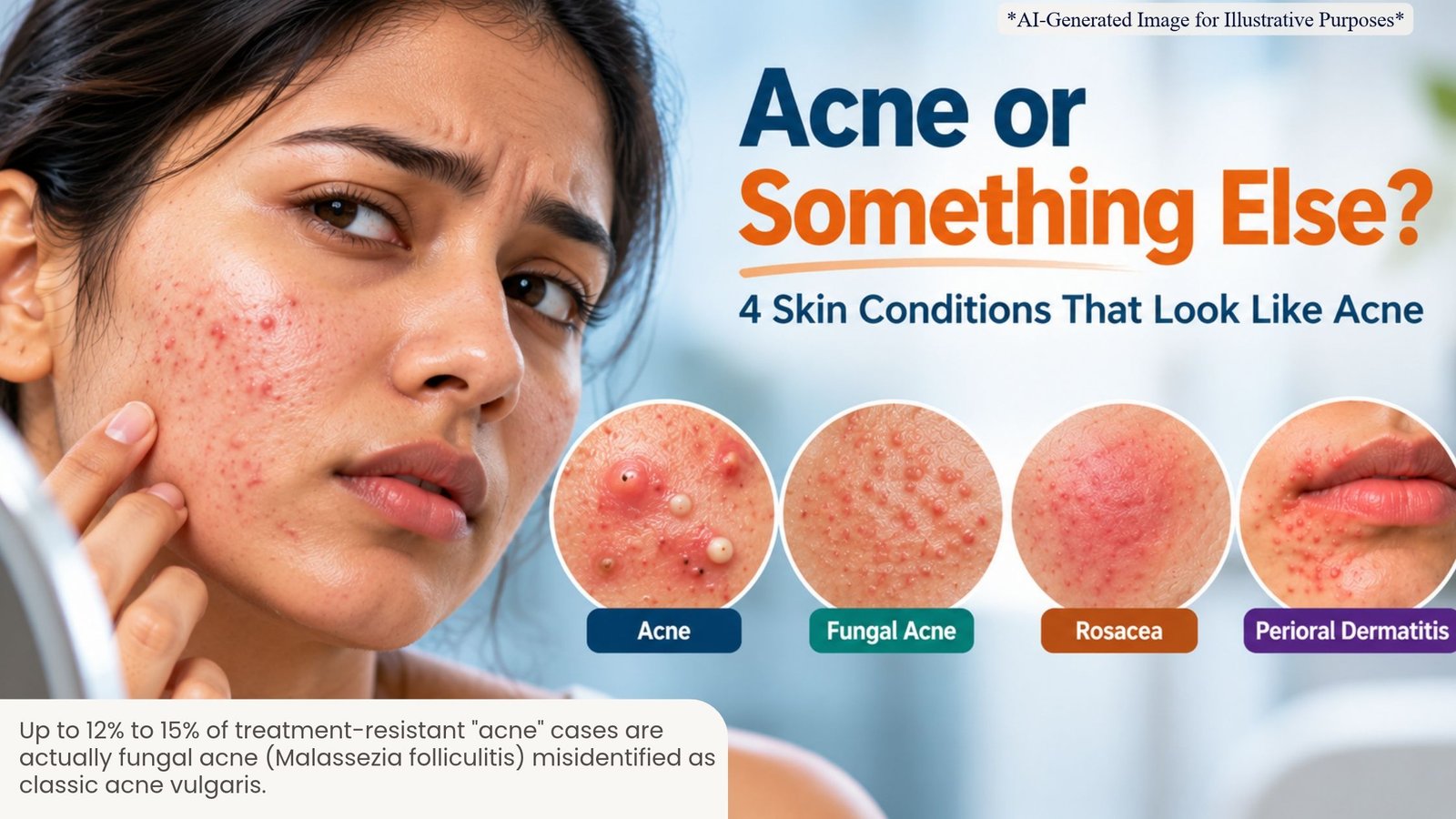
Have you been diligently applying salicylic acid or benzoyl peroxide for weeks, only to find that your stubborn bumps refuse to clear up? As a board-certified dermatologist, I see patients every day who feel frustrated because their skin looks like classic acne, yet standard treatments only seem to make matters worse.
Here is the truth: what you are seeing might not be acne vulgaris at all. Millions of people suffer from acneiform eruptions—skin conditions that mimic the appearance of pimples but stem from entirely different root causes. Treating these conditions with harsh, drying acne actives destroys your skin barrier and delays true healing.
So, what is actually causing your breakouts, and how can you tell the difference? Let me break down the diagnostic markers I use in my clinic.
1. What Is Actually Causing My Breakouts?
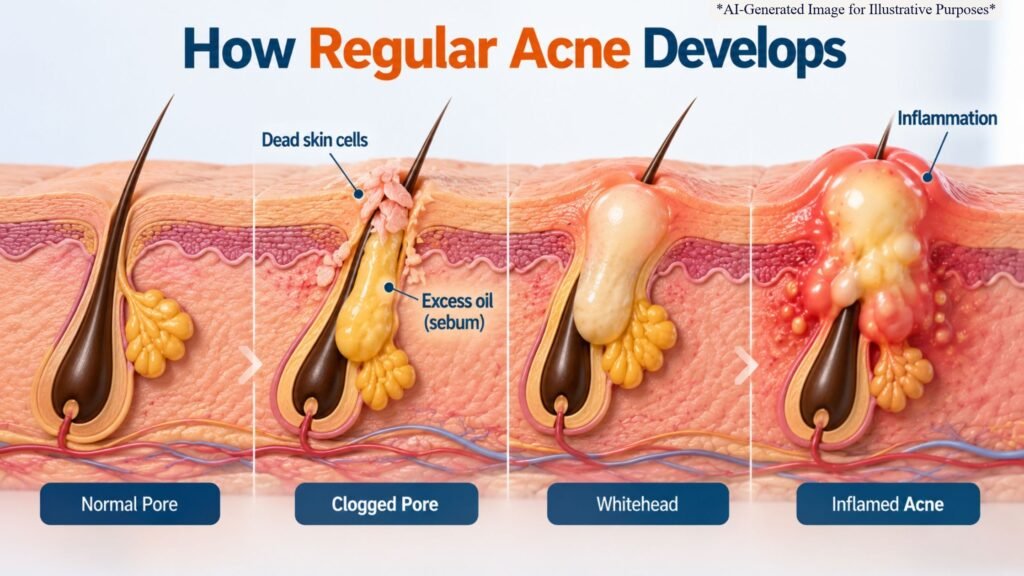
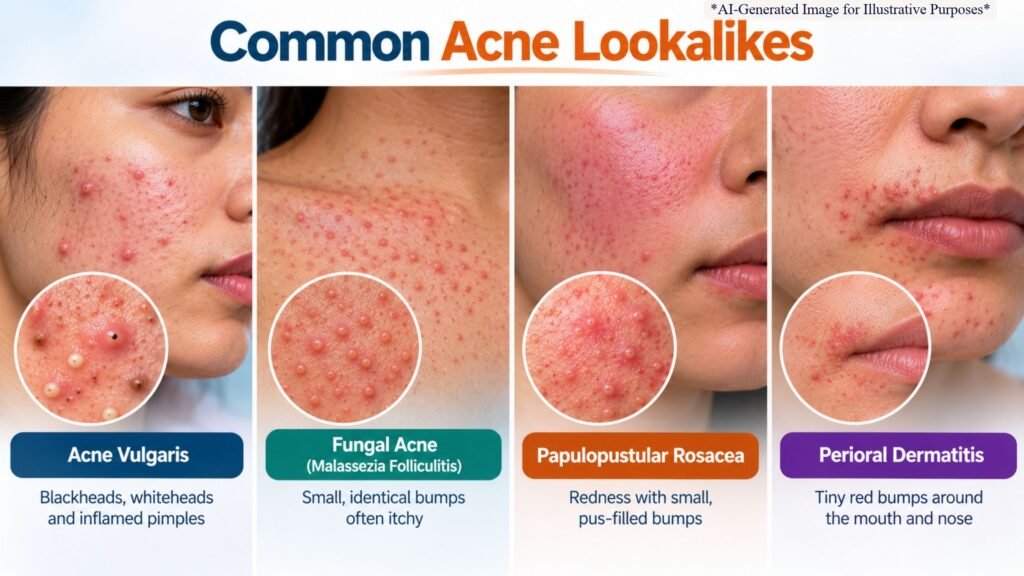
True acne vulgaris occurs when sticky dead skin cells and excess sebum clog a pore, creating an anaerobic environment where Cutibacterium acnes bacteria thrive. This process produces blackheads, whiteheads, inflamed papules, and deep cysts.However, if your skin is not responding to typical acne care, one of these common “acne lookalikes” may be responsible:
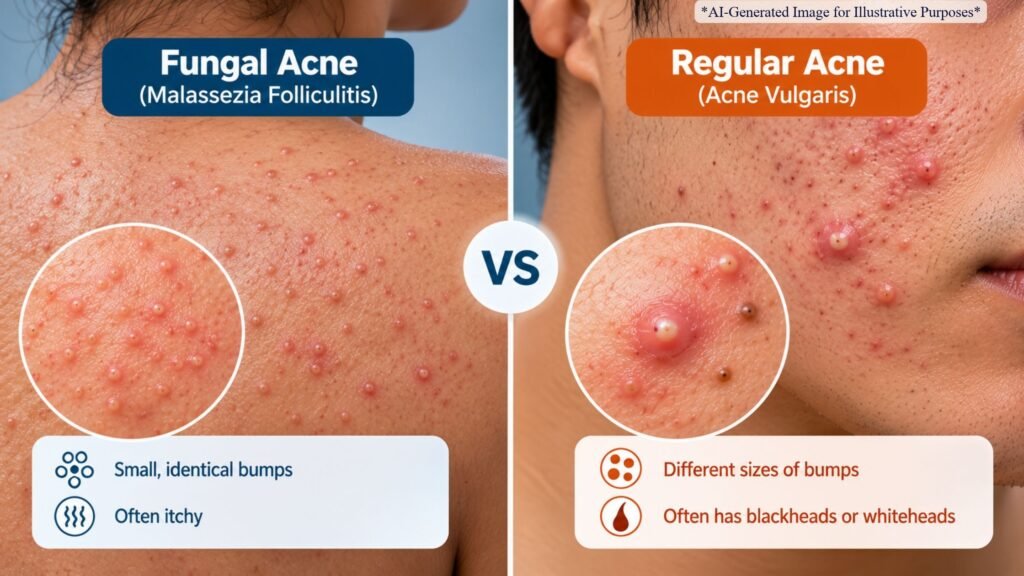
- Fungal Acne (Malassezia Folliculitis): This is not acne at all, but rather an overgrowth of natural skin yeast inside hair follicles.Clinical studies reveal that Malassezia folliculitis is misdiagnosed as recalcitrant acne in up to 12% to 15% of cases.
- Papulopustular Rosacea: An inflammatory vascular condition that creates small, red, pus-filled bumps across the central face.A survey by the National Rosacea Society found that nearly 50% of rosacea patients initially mistook their condition for acne.
- Perioral Dermatitis: An inflammatory rash characterized by clusters of tiny red papules around the mouth and nose. It is frequently triggered by heavy creams, fluoridated toothpaste, or topical steroid overuse.
- Bacterial Folliculitis: A bacterial infection (Staphylococcus aureus) of the hair follicles that often presents after shaving or sweating.
2. The Quick Diagnostic Checklist: How to Tell ThemApart
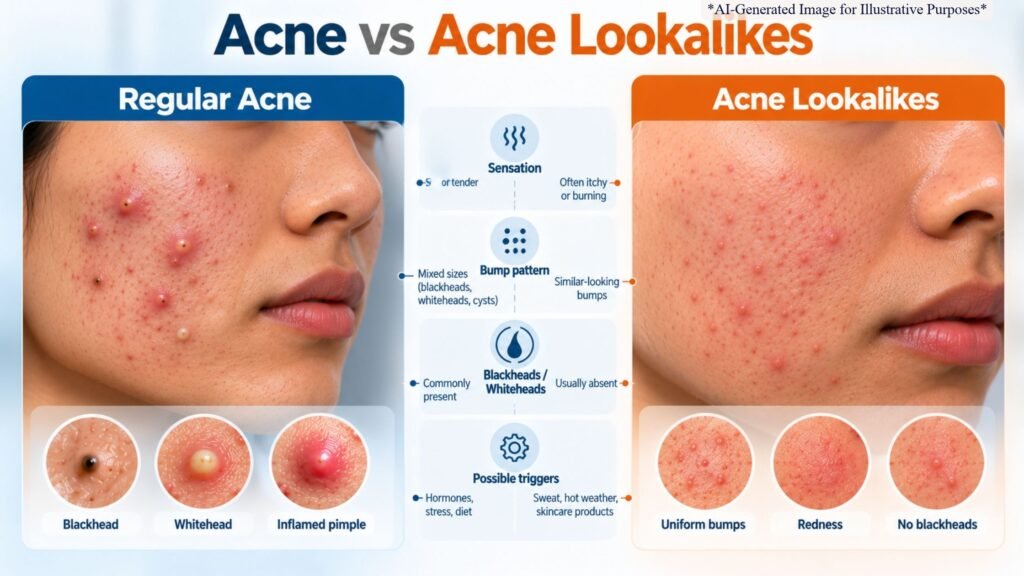
When I evaluate a patient in my office, I look beyond the initial visual appearance to check four specific markers:
| Marker | Classic Acne | Acne Lookalikes (Fungal, Rosacea, Dermatitis) |
| Sensation | Sore, tender, or non-itchy | Frequently itchy, burning, or stinging |
| Lesion Variety | Mixed (blackheads, whiteheads, cysts) | Monomorphic (identical, uniform red bumps) |
| Comedones | Blackheads/whiteheads are present | Zero blackheads present |
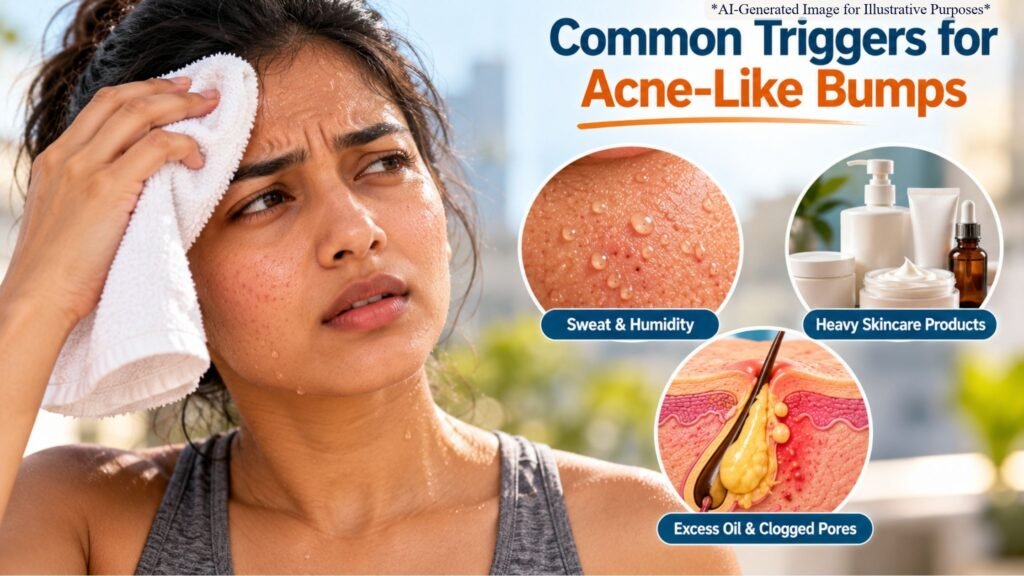
| Triggers | Hormones, stress, high-glycemic foods | Sweat, hot weather, rich oils, or heavy creams |
If your bumps are intensely itchy, identical in size, and lack blackheads, you are likely dealing with an acne mimic.
3. What Most Websites Won’t Tell You
Most online guides list symptoms, but they miss the subtle clinical triggers that I evaluate during a consultation:
The Antibiotic Paradox
If you were prescribed oral or topical antibiotics for “stubborn acne” and your skin suddenly exploded in itchy, uniform bumps, you may have developed fungal acne. Prolonged antibiotic use wipes out the good bacteria on your skin, allowing Malassezia yeast to multiply without competition.
“Yeast Feeders” in Barrier Creams
Viral skincare trends advocate applying rich, occlusive creams to repair a damaged barrier. However, if your bumps are caused by fungal yeast, heavy ingredients containing esters, polysorbates, and fatty acids act as direct fuel for Malassezia growth, worsening the breakout overnight.
4. What Should You Do Next?
If you suspect your “acne” is actually a lookalike, follow this simple protocol to protect your skin:
- Pause harsh actives: Stop applying salicylic acid, benzoyl peroxide, and strong exfoliants for 7 to 10 days.
- Simplify your routine: Switch to a gentle, non-foaming cleanser, a lightweight oil-free moisturizer, and a mineral sunscreen.
Try short-contact washing: If you suspect fungal acne, apply an over-the-counter anti-dandruff shampoo containing 2% zinc pyrithione or ketoconazole to the affected area, leave it on for 2 to 3 minutes, and rinse thoroughly.
When to See a Dermatologist
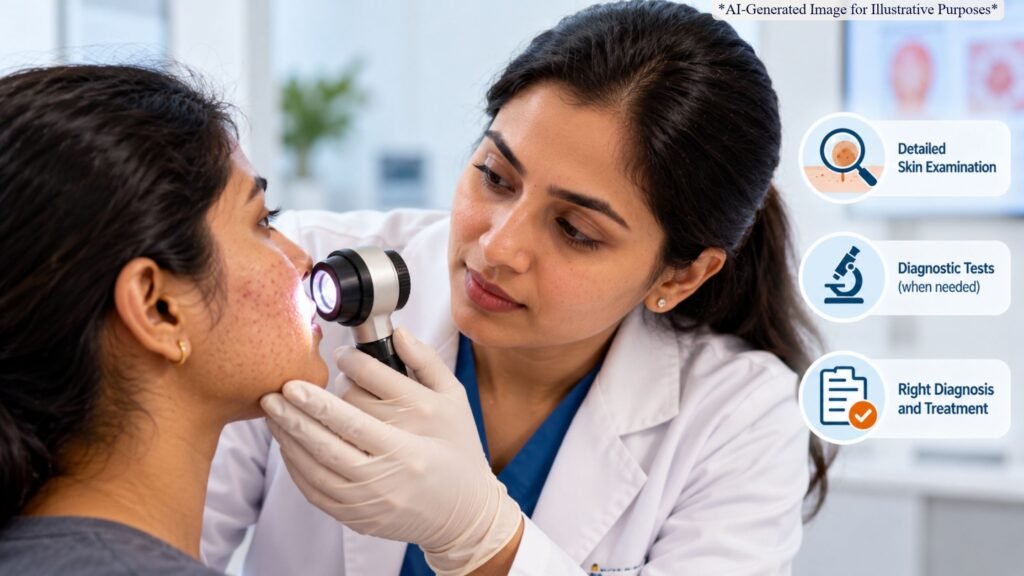
Self-diagnosis has its limits. In my clinic, I perform quick diagnostic tests like Wood’s Lamp examinations (which illuminate yeast fluorescently under UV light) or KOH skin scrapings to give you a definitive answer within minutes.
If your skin remains inflamed, spreading, or painful, stop guessing. Schedule a consultation with a board-certified dermatologist so we can target the true root cause and restore your skin health safely.
Would you like to prepare this article for publishing or social distribution?
Generate a meta title, description, and target keyword list for SEO
Create key takeaways to share on social media
Frequently Asked Questions
Based on the queries I address daily in my clinical practice—especially from patients navigating tropical humidity, heavy seasonal sweating, and traditional skincare habits—here are the top five questions about acne lookalikes:
1. How do I know if my breakouts during hot, humid months are fungal acne or regular acne?
Fungal acne thrives in India’s humid climate, appearing as tiny, identical, intensely itchy bumps on your forehead, chest, or back.Regular acne varies in size, includes blackheads or whiteheads, and rarely itches. If your bumps flare with sweat and itch, consult me for an antifungal evaluation.
2. Can applying coconut oil or heavy hair oils cause these acne-like bumps?
Yes. Traditional heavy oils like coconut oil trap sweat and act as direct food for Malassezia yeast and bacteria inside hair follicles. This triggers fungal or bacterial folliculitis on your forehead and hairline.I advise switching to lightweight, non-comedogenic hair products.
3. How can I tell the difference between heat rash (ghamori) and acne?
Heat rash (miliaria) forms tiny, clear or red pinprick bumps that sting or itch intensely in sweat-prone areas.It resolves quickly once you cool down.Acne involves clogged pores with blackheads or deeper, tender cysts that persist regardless of your body temperature.
4. Why did my bumps worsen after using antibiotic creams for my “acne”?
Antibiotics target bacteria, but they also kill the beneficial microbes that keep yeast in check.If your breakout is actually fungal acne (Malassezia folliculitis), wiping out skin bacteria allows yeast to multiply rapidly. In my clinic, I immediately pause antibiotics and switch to antifungal care.
5. How quickly will these acne-like bumps clear up once correctly diagnosed?
Unlike true acne, which requires months of treatment, acne lookalikes often respond quickly once correctly identified. With targeted antifungal or anti-inflammatory care, I typically see my patients experience noticeable relief from itching and visible bump reduction within 2 to 3 weeks.