Call us at
+91 70020 33804


What Happens When You Tear Your ACL? 5 Signs You Should Know
A sudden twist of the knee while playing football, badminton, or basketball can cause more than temporary pain. You may hear a popping sound, notice swelling, or feel that your knee is no longer stable.
These could be warning signs of an anterior cruciate ligament (ACL) tear.
The ACL is one of the main ligaments that stabilise your knee. An injury can affect how your knee moves, supports your body, and handles sudden changes in direction.I often encourage patients not to judge the severity of a knee injury by pain alone. Understanding what happens inside the joint can help you recognise the warning signs and seek timely treatment.
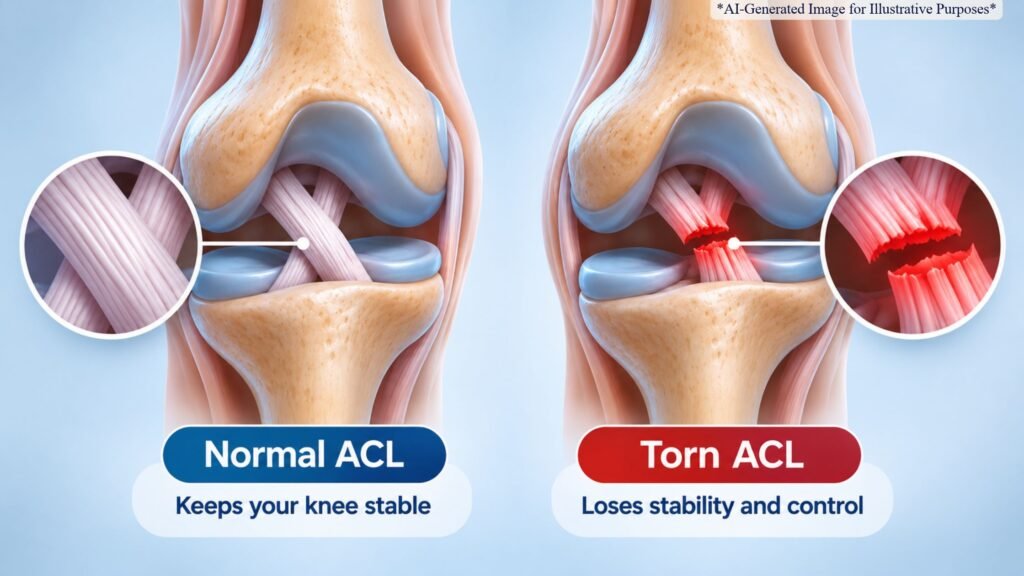
What Happens When You Tear Your ACL?
The anterior cruciate ligament (ACL) is a strong band of tissue located inside your knee. It connects your thigh bone (femur) to your shin bone (tibia).
Its main job is to prevent the shin bone from moving too far forward and to control excessive rotation of the knee.When you suddenly twist your knee, land awkwardly after a jump, or change direction while running, the force can stretch the ACL beyond its limit and tear some or all of its fibres.
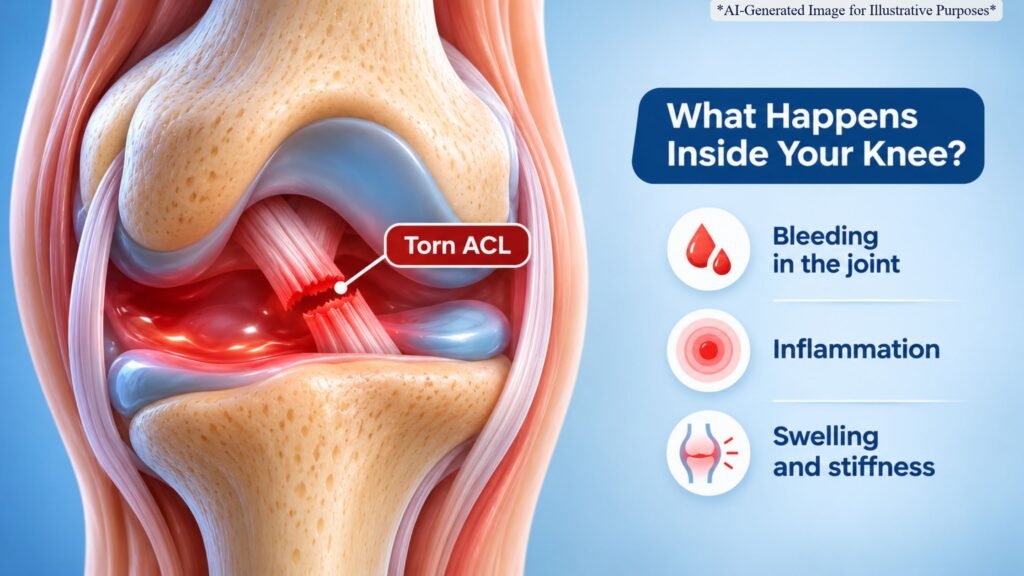
But what actually happens inside your knee?
An ACL tear causes two major changes:
- Mechanical impact: Your knee loses an important source of stability. The shin bone may move excessively forward or rotate in relation to the thigh bone. This can make your knee feel unstable, particularly when you turn, run, or change direction.
- Physiological impact: The torn ligament and surrounding blood vessels can bleed into the knee joint. This triggers inflammation and fluid accumulation, causing swelling, pain, and stiffness. Your knee may also lose some of its normal position-sensing ability, making movement less controlled.
Around 70% of ACL injuries occur without direct contact with another player. Sudden stopping, pivoting, and awkward landings are common causes.
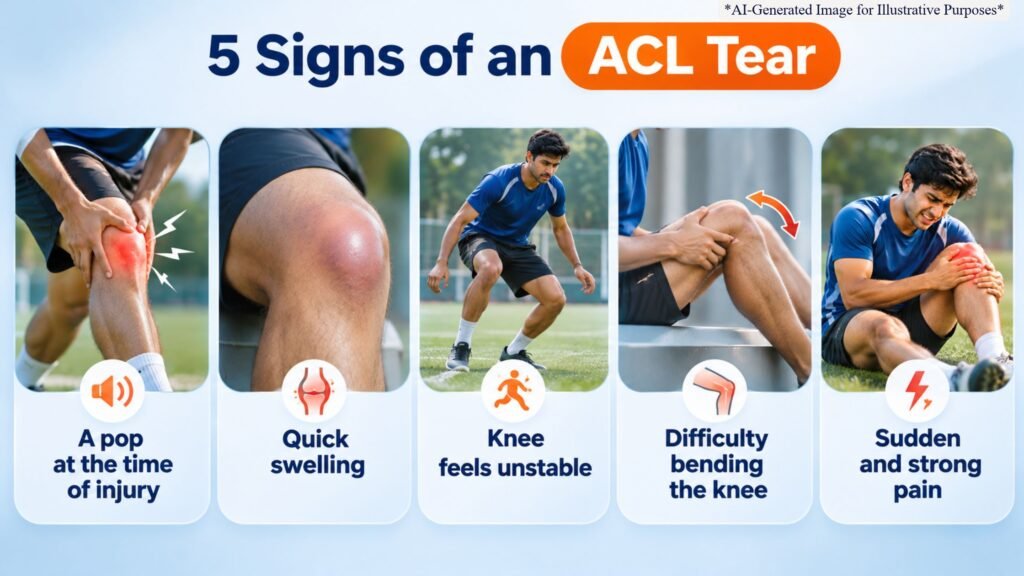
5 Signs You Should Know After an ACL Tear
1. A Popping Sound or Sensation
Many people describe hearing or feeling a pop when their ACL tears. This can happen when the ligament fibres rupture.
However, not everyone experiences this sensation. A popping sound alone does not confirm an ACL injury.
2. Sudden Knee Swelling
Swelling often develops within a few hours of an ACL injury.
When the ligament tears, small blood vessels can bleed into the knee joint. This condition is called haemarthrosis.
The collected blood and inflammatory fluid increase pressure inside the joint, causing swelling, pain, and difficulty moving your knee.
3. Knee Instability or Giving Way
You may feel that your knee cannot support your body properly.
This happens because the damaged ACL can no longer control the forward movement and rotation of your shin bone effectively.
You may notice this instability when walking on uneven surfaces, turning, running, or climbing stairs.
4. Difficulty Bending or Straightening Your Knee
Swelling, pain, and inflammation can restrict your knee movement.
Some patients struggle to bend their knees fully, while others cannot straighten them completely. An associated meniscus injury can also cause restricted movement or locking.
5. Sudden Pain and Difficulty Continuing Activity
You may experience immediate pain when the injury occurs. The pain can vary depending on the severity of the tear and whether other structures are damaged.
Many athletes cannot continue playing after an ACL injury. However, some people can still walk, even with a complete tear.Being able to walk does not rule out an ACL injury.
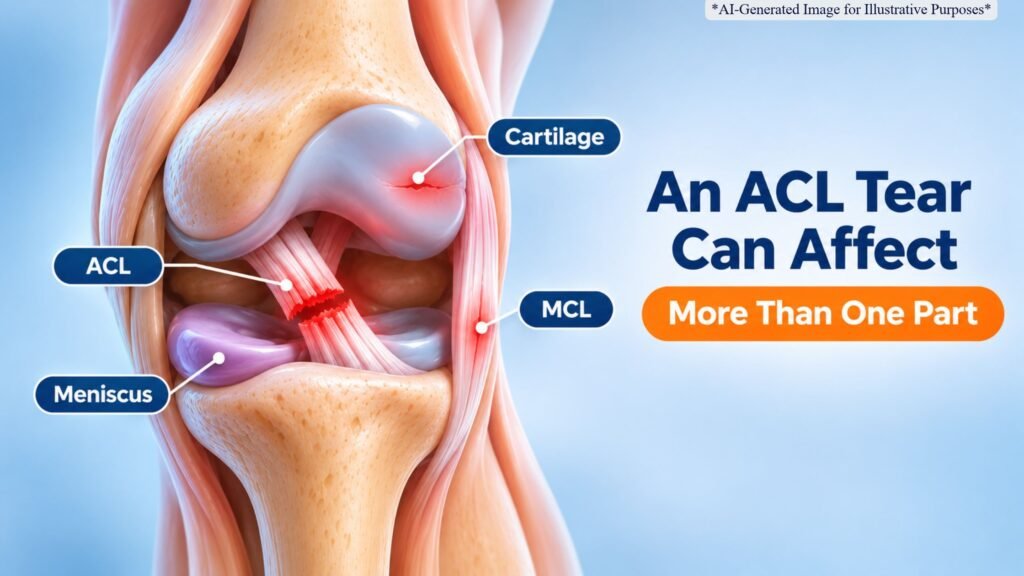
Can an ACL Tear Damage Other Parts of Your Knee?
Yes. An ACL tear can occur alongside injuries to other structures.
These include:
- Meniscus: The cartilage that absorbs shock inside your knee.
- Articular cartilage: The smooth tissue covering the ends of your bones.
- MCL: The ligament that supports the inner side of your knee.
- Bone: A bone bruise can develop when the bones strike each other during the injury.
Repeated episodes of knee instability may also increase the risk of further meniscus and cartilage damage.
How Do Doctors Diagnose an ACL Tear?
I begin by understanding how the injury happened and examining the knee for swelling, tenderness, movement, and stability.
I may perform a Lachman test to assess abnormal forward movement of the shin bone.An MRI scan helps confirm an ACL tear and identify associated meniscus or cartilage injuries. An X-ray may also help rule out fractures, although it cannot directly show the ACL.
What Should You Do If You Suspect an ACL Tear?
Stop playing sports or exercising immediately. Avoid twisting or putting unnecessary stress on the injured knee.Apply ice with a protective cloth, elevate your leg, and seek an orthopaedic assessment. If you cannot bear weight, have severe swelling, or your knee locks, seek prompt medical attention.

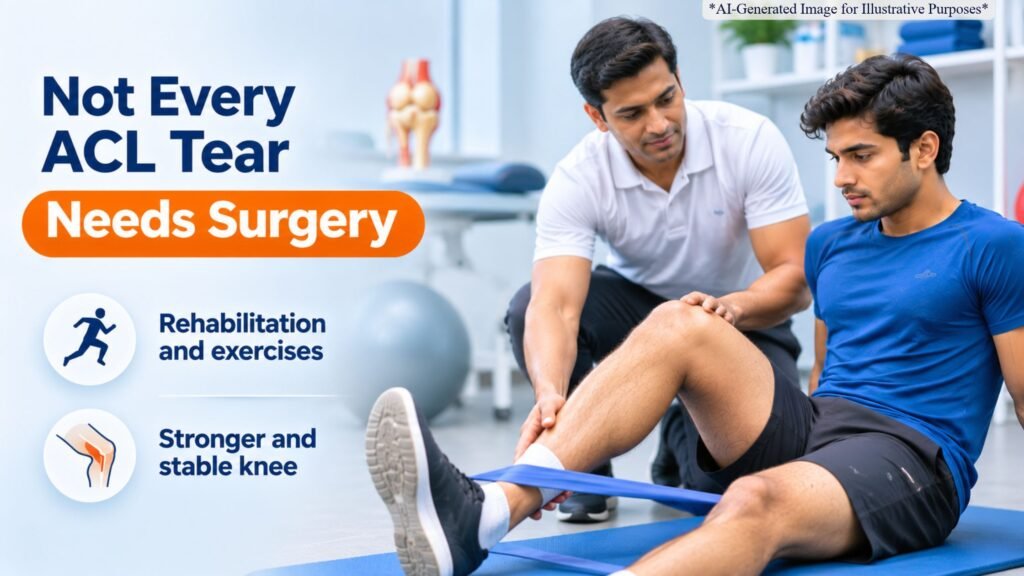
Does Every ACL Tear Require Surgery?
No. Treatment depends on the severity of the injury, knee stability, activity level, and associated damage.
Some patients can manage their condition with structured physiotherapy and muscle strengthening. Others, particularly those with significant instability who wish to return to pivoting sports, may benefit from ACL reconstruction.
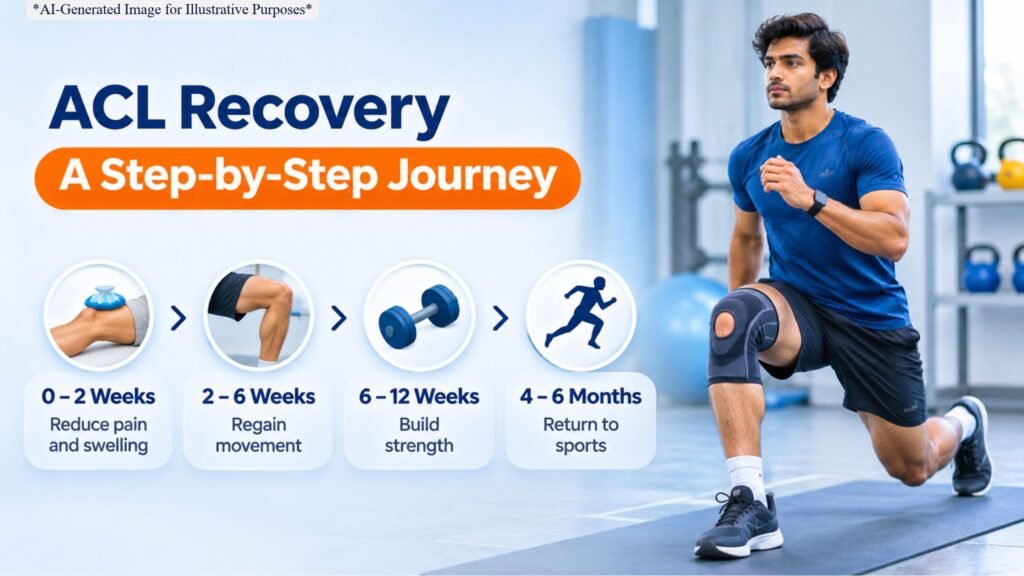
Recovery requires a planned rehabilitation programme. Returning to sports depends on strength, balance, knee stability, and functional testing, not simply the passage of time.
Frequently Asked Questions
1. Can I walk with a completely torn ACL?
Yes. Some people can walk because other muscles and structures help support the knee. However, they may experience instability during sudden movements.
2. Can an ACL tear heal on its own?
Some partial tears may improve with rehabilitation. Complete tears generally do not regain normal function on their own, although selected patients can manage without surgery.
3. How long does ACL recovery take?
Recovery varies depending on the injury and treatment. Returning to sports after reconstruction often takes 9–12 months or longer, depending on rehabilitation and functional readiness.
4. Can I play sports with a torn ACL?Playing sports with an unstable knee can increase the risk of further injury. I recommend getting your knee assessed before returning to physical activity.