Call us at
+91 70020 33804


Total Knee Replacement: When Is Surgery Actually Necessary?
Knee pain can slowly change your everyday life. Walking becomes difficult. Climbing stairs hurts. Even getting out of bed or standing for a few minutes can become uncomfortable.
If you have knee osteoarthritis, you may wonder whether you need a total knee replacement or can manage the condition without surgery.
I often explain to patients that an X-ray showing severe arthritis does not automatically mean you need a knee replacement. The decision depends on how much pain you experience, how well you move, and whether other treatments still provide relief.Let me explain when knee replacement becomes the right treatment option.
What Is Total Knee Replacement?
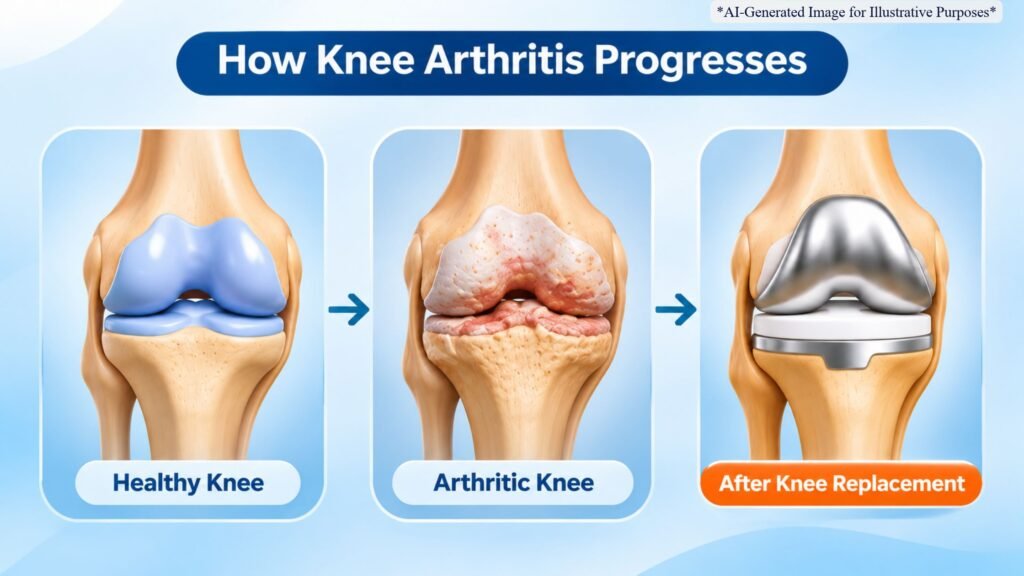
Total knee replacement is a surgical procedure in which I remove the damaged joint surfaces and replace them with artificial components.
Doctors most commonly recommend this surgery for advanced knee osteoarthritis, a condition in which the protective cartilage gradually wears away.
As the cartilage becomes thinner, the bones experience increased friction. This can cause pain, stiffness, swelling, and difficulty walking.According to the World Health Organization, approximately 365 million people worldwide had knee osteoarthritis in 2019. It remains a major cause of pain and disability.

When Is Total Knee Replacement Actually Necessary?
I consider total knee replacement when knee pain and stiffness significantly affect a patient’s quality of life and appropriate non-surgical treatments no longer provide enough relief.
Here are five important signs that surgery may be appropriate.
1. Persistent knee pain despite treatment
If you continue to experience knee pain despite medicines, physiotherapy, injections, and lifestyle changes, you may need to consider surgery.
2. Difficulty performing everyday activities
If walking, climbing stairs, standing, or getting up from a chair becomes difficult, your knee condition may have reached an advanced stage.
3. Pain that disturbs your sleep
Advanced knee arthritis can cause pain even when you are resting. If knee pain regularly interrupts your sleep, you should seek an orthopaedic assessment.
4. Severe stiffness and reduced movement
Difficulty bending or straightening your knee can affect your independence and daily activities.
5. Progressive knee deformity
Some patients develop bowing of the legs or other changes in knee alignment as arthritis progresses. Severe deformity may make surgery a more appropriate option.However, these signs do not automatically mean you need surgery. I consider them alongside your examination and X-ray findings.
Does Bone-on-Bone Arthritis Always Require Surgery?
No.
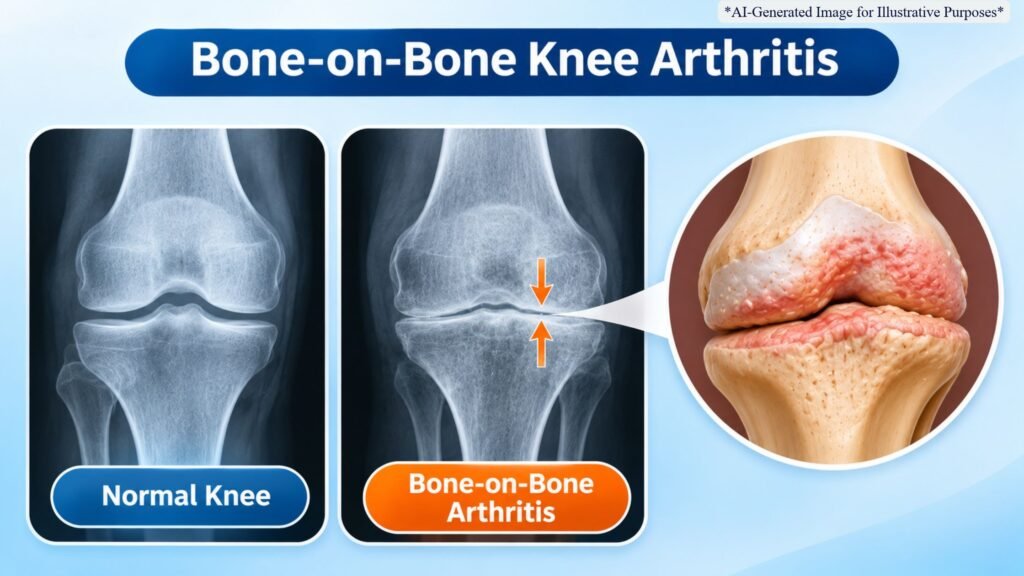
An X-ray showing bone-on-bone arthritis indicates significant cartilage loss. However, the severity of X-ray findings does not always match the patient’s symptoms.
Some patients with advanced arthritis can still walk comfortably and manage their daily activities.
Others experience severe pain even with less advanced changes on X-rays.
That is why I never recommend knee replacement based on an X-ray alone. I also consider pain, movement, joint stability, and the effect of arthritis on daily life.
Can You Avoid Knee Replacement Surgery?
Yes, many patients can manage knee osteoarthritis without surgery, particularly during its earlier stages.
I usually consider these treatment options before recommending knee replacement:
- Physiotherapy: Strengthening the muscles around the knee can improve support and movement.
- Weight management: Losing excess weight can reduce pressure on the knee joint.
- Medicines: Suitable pain relievers and anti-inflammatory medicines can help control symptoms.
- Injections: Corticosteroid injections may provide temporary relief in selected patients.
- Lifestyle changes: Low-impact activities, walking aids, and avoiding activities that worsen pain can help.
These treatments can reduce pain and improve movement. However, they cannot reliably restore severely damaged cartilage.

How Long Should You Try Non-Surgical Treatment Before Surgery?
There is no fixed waiting period for every patient.
I generally recommend an appropriate trial of non-surgical treatment before considering surgery. However, the duration depends on the severity of arthritis, pain, mobility, and response to treatment.If these treatments fail to provide meaningful relief and your daily activities remain restricted, continuing the same treatment indefinitely may not help.

What Happens If You Delay Knee Replacement?
Delaying surgery does not always cause permanent damage. Some patients can manage their symptoms for years without an operation.
However, prolonged pain and reduced movement can lead to:
- Loss of muscle strength.
- Reduced walking ability.
- Increasing dependence on others.
- Progressive knee deformity in some patients.
- Reduced quality of life.
You do not need to wait until you cannot walk before discussing surgery with an orthopaedic surgeon.
Does Age Matter When Deciding on Knee Replacement?
Age alone does not determine whether you need knee replacement.
Younger patients may have a higher chance of needing revision surgery during their lifetime because they have more years of implant use ahead.
Older patients can also benefit from knee replacement if their general health allows them to undergo surgery.I consider overall health, activity level, joint damage, and expected benefits rather than using age as the deciding factor.
How Long Does a Knee Replacement Last?
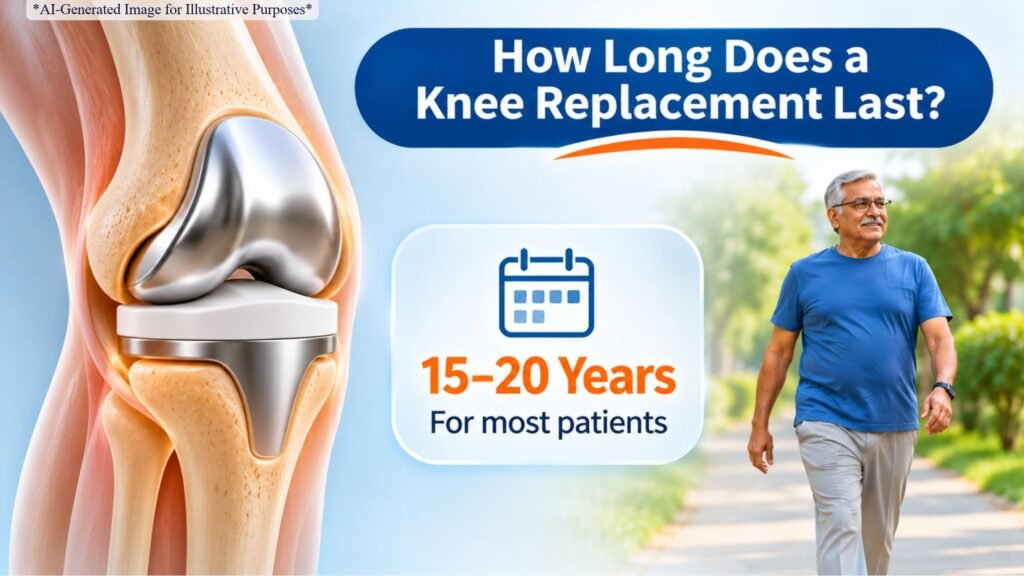
Modern knee replacement implants can last many years.
A 2019 systematic review published in The Lancet estimated that approximately 82.3% of total knee replacements lasted 25 years.
However, implant lifespan varies between patients. Activity level, body weight, implant design, and other health factors can influence long-term results.
When Should You Consult an Orthopaedic Surgeon?
Consider an orthopaedic assessment if you experience persistent knee pain, difficulty walking, increasing stiffness, or pain that affects your sleep.
Seek urgent medical attention if your knee suddenly becomes hot, red, and severely swollen, particularly if you develop a fever.
Conclusion: How Do You Know When It Is Time for Knee Replacement?
Total knee replacement is not necessary for every patient with knee arthritis.
I recommend considering surgery when persistent pain, stiffness, and reduced mobility significantly affect daily life and appropriate non-surgical treatments no longer provide sufficient relief.
The right time for knee replacement is not decided by your X-ray alone. It is decided by how your knee affects your life and whether other treatments can still help.
If knee pain is affecting your daily activities, consult an orthopaedic surgeon to understand your treatment options and make an informed decision.
Frequently Asked Questions About Total Knee Replacement
1. How do I know if I need a total knee replacement?
I consider knee replacement when persistent pain, stiffness, and difficulty walking affect daily life despite appropriate treatment. X-ray findings, physical examination, and your response to non-surgical treatments help me make this decision.
2. Can I avoid knee replacement even if I have Grade 4 knee arthritis?
Yes. Some patients with Grade 4 arthritis can manage their symptoms through physiotherapy, weight management, medicines, and other treatments. I recommend surgery when these options no longer provide sufficient relief.
3. What is the right age for total knee replacement surgery?
There is no fixed age for knee replacement. I consider the severity of arthritis, pain, mobility, overall health, and quality of life rather than deciding based on age alone.
4. Can I delay knee replacement surgery if I have severe knee arthritis?
Yes, if your symptoms remain manageable. However, delaying surgery despite severe pain and reduced mobility can affect your quality of life. I recommend reviewing your condition regularly with an orthopaedic surgeon.
5. Will I be able to sit cross-legged or squat after knee replacement?Many patients can return to several daily activities after recovery. However, deep squatting and sitting cross-legged may remain difficult. I discuss realistic movement goals before surgery because results vary between patients.