Call us at
+91 70020 33804

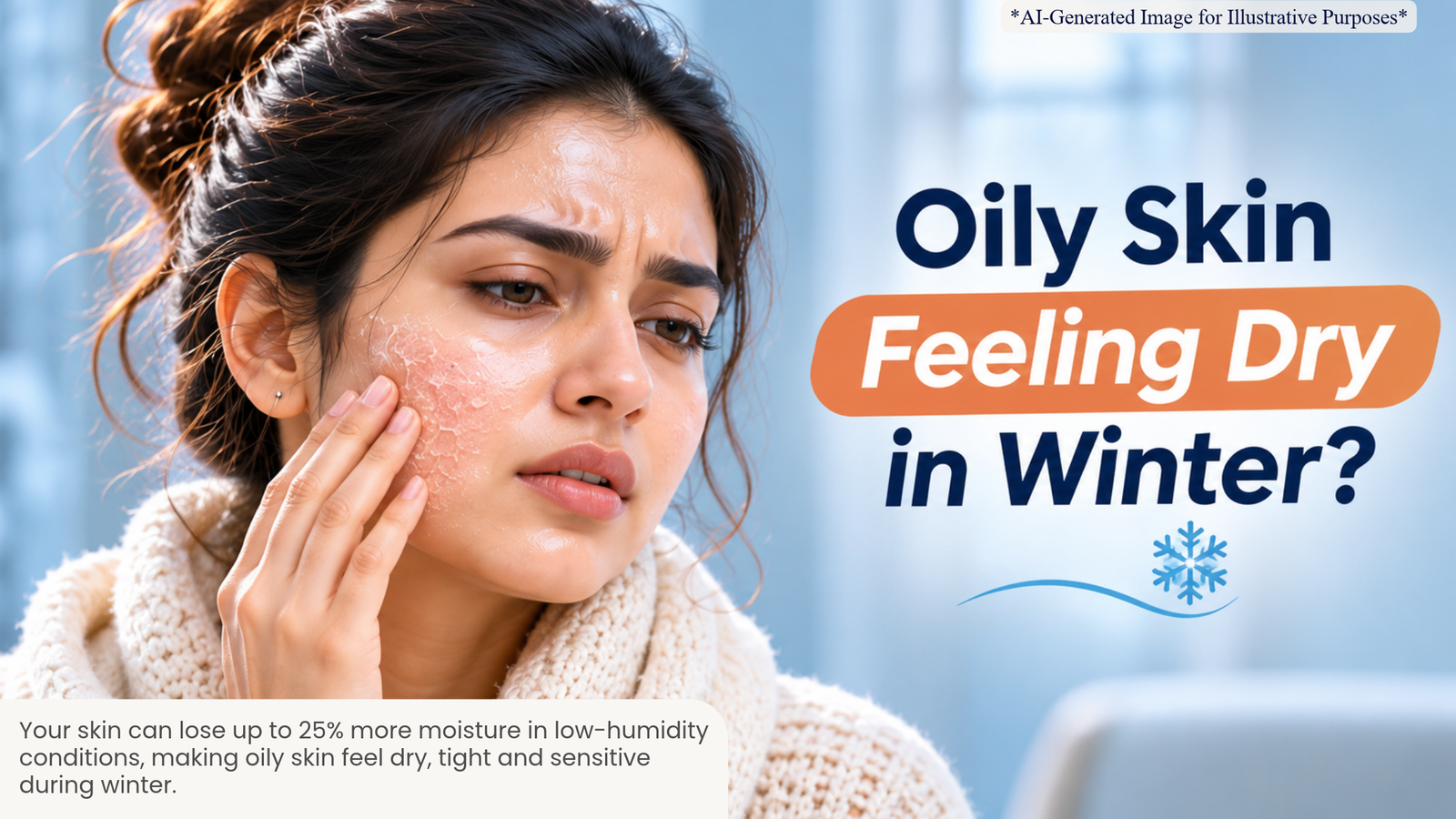
Winter Skincare for Oily Skin: Why Your Skin Feels Dry, Tight and Sensitive When the Weather Changes
Does your face look oily but feel tight after washing during winter? Do you notice dry patches, flaky skin or unusual sensitivity even though you have oily skin?
You are not alone. Many people with oily and acne-prone skin experience these changes when the weather becomes colder.
The reason is simple: oil and water are not the same thing. Your skin can produce excess oil while losing moisture at the same time.
As a dermatologist, I often explain to my patients that oily skin still needs hydration. During winter, your skincare routine should focus on maintaining moisture and protecting the skin barrier rather than removing excess oil.Let’s understand why this happens and how you can care for your skin.
Can Oily Skin Become Dry During Winter?
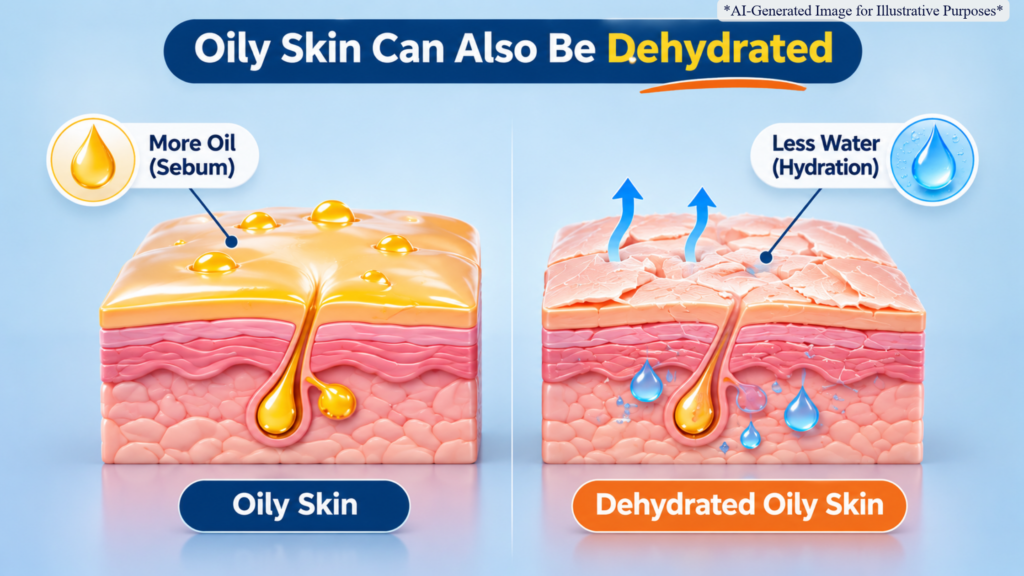
Yes. Oily skin can become dehydrated during winter, even if it continues to produce excess sebum.
To understand this, you need to know the difference between oil and water in your skin.
- Sebum (oil): Your sebaceous glands produce this natural oil. It helps lubricate the skin and protect its surface.
- Hydration (water): Water keeps the outer skin layers hydrated, soft and comfortable.
Your skin needs both.
Think of it this way: your skin can have enough oil but not enough water. This condition is called dehydrated skin.You may notice an oily forehead and nose while your cheeks feel dry, rough or tight. This does not mean your skin type has changed. It means your skin needs better hydration.
Why Does Oily Skin Feel Dry, Tight and Sensitive in Winter?
Several environmental and skincare-related factors can contribute to winter dryness.
1. Lower Humidity Increases Moisture Loss
Cold weather often comes with lower humidity. This means there is less moisture in the surrounding air.
As a result, water escapes from your skin more easily through a process called transepidermal water loss (TEWL).
Research published in 2014 found seasonal changes in skin hydration and water loss among Asian women. This shows how environmental changes can affect skin health.
2. Your Skin Barrier Loses Its Strength
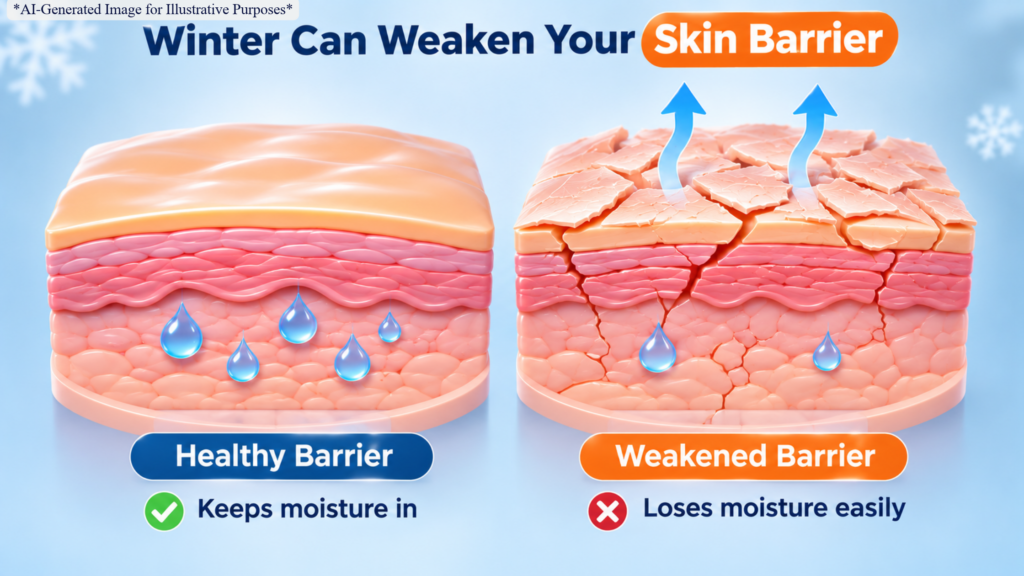
Your skin barrier acts like a protective wall. It keeps moisture inside and protects your skin from irritants.
Cold weather, low humidity and harsh skincare products can weaken this barrier.
When it does not function properly, you may experience tightness, redness, flaking and increased sensitivity.
3. Your Sebum Production Can Change
Cold weather can influence how much oil your skin produces. Some people notice less oil during winter.
However, sebum production varies between individuals. Even if your skin continues producing plenty of oil, it may still lack sufficient hydration.
4. Hot Water and Harsh Cleansers Make Things Worse
Hot showers and strong face washes can remove natural oils from your skin.
This can disturb the protective barrier and increase dryness.
5. Acne Treatments Can Increase Irritation
Ingredients such as salicylic acid, benzoyl peroxide and retinoids help manage acne. However, frequent use can cause dryness and irritation, especially when your skin already feels sensitive.
How to Tell If Your Oily Skin Is Dehydrated
Look for these common signs:
- Your face feels tight after washing.
- Your skin looks shiny but feels rough.
- You notice flaky patches around your nose or mouth.
- Fine lines appear more noticeable.
- Your usual skincare products suddenly sting.
If you experience persistent redness, itching, burning or peeling, you may have skin barrier irritation or another skin condition. A dermatologist can help identify the cause.
How Should You Care for Oily Skin During Winter?
You do not need an entirely new skincare routine. You simply need to make a few changes.
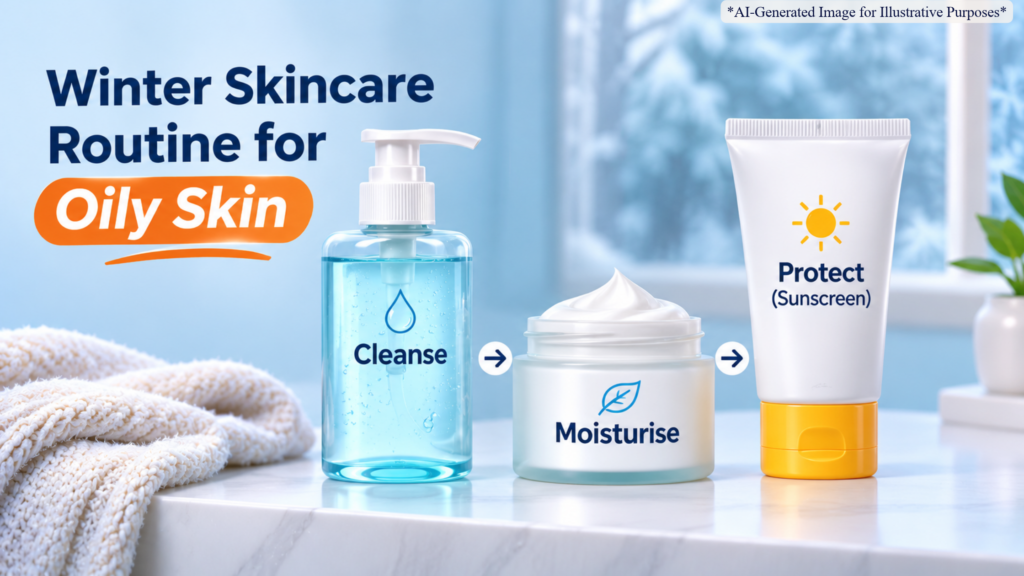
1. Switch to a Gentle Cleanser
Choose a mild, non-stripping cleanser. Avoid harsh face washes that leave your skin feeling excessively tight.
Wash your face twice daily or as needed.
2. Your Skin Barrier Loses Its Strength
Your skin barrier acts like a protective wall. It keeps moisture inside and protects your skin from irritants.
Cold weather, low humidity and harsh skincare products can weaken this barrier.
When it does not function properly, you may experience tightness, redness, flaking and increased sensitivity.
3. Your Sebum Production Can Change
Cold weather can influence how much oil your skin produces. Some people notice less oil during winter.
However, sebum production varies between individuals. Even if your skin continues producing plenty of oil, it may still lack sufficient hydration.
4. Hot Water and Harsh Cleansers Make Things Worse
Hot showers and strong face washes can remove natural oils from your skin.
This can disturb the protective barrier and increase dryness.
5. Acne Treatments Can Increase Irritation
Ingredients such as salicylic acid, benzoyl peroxide and retinoids help manage acne. However, frequent use can cause dryness and irritation, especially when your skin already feels sensitive.
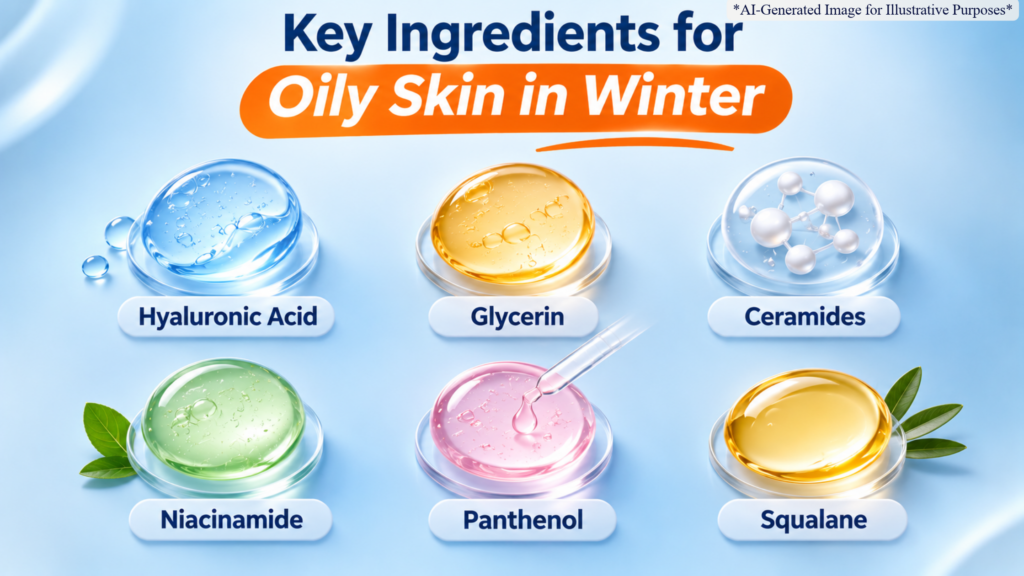
Which Skincare Ingredients Are Best for Oily Skin in Winter?
Look for these ingredients when choosing winter skincare products:
- Glycerin: Helps attract water into the outer skin layers.
- Hyaluronic acid: Helps retain moisture.
- Ceramides: Support the protective skin barrier.
- Niacinamide: Helps support barrier function and regulate excess oil.
- Panthenol: Helps soothe and hydrate the skin.
- Squalane: Helps soften the skin and reduce moisture loss.
You do not need every ingredient in your routine. Choose products according to your skin’s needs.
Common Winter Skincare Mistakes to Avoid
If you have oily skin, avoid these common mistakes:
- Skipping moisturiser to prevent oily skin.
- Washing your face too frequently.
- Using hot water to wash your face.
- Overusing salicylic acid and other exfoliating products.
- Scrubbing away flaky skin.
- Trying several new skincare products at once.
These habits can increase irritation and make winter dryness worse.

When Should You Consult a Dermatologist?
Consult a dermatologist if you experience persistent redness, severe itching, burning, painful cracks or repeated skin peeling.
These symptoms may indicate more than seasonal dehydration. Conditions such as eczema, contact dermatitis and seborrhoeic dermatitis can also cause similar symptoms.An examination can help identify the cause and guide the right treatment.
Final Thoughts
Having oily skin does not mean your skin cannot become dry or dehydrated.
During winter, focus on maintaining hydration, protecting your skin barrier and avoiding harsh skincare habits.Remember, the goal is not to remove all the oil from your skin. It is to maintain the right balance between oil and moisture.
Recommended FAQ section for your blog
1. Why does oily skin feel dry and tight during winter?
Oily skin produces sebum, but sebum does not provide enough hydration. Cold weather and low humidity increase moisture loss from the skin, causing tightness, roughness and dryness even when your face looks oily.
2. Should I use moisturiser if I have oily skin during winter?
Yes. I recommend using a lightweight, non-comedogenic moisturiser. Look for ingredients such as glycerin, ceramides and hyaluronic acid to maintain hydration without adding unnecessary heaviness.
3. Which moisturiser is best for oily and acne-prone skin in winter?
Choose a lightweight, non-comedogenic moisturiser containing glycerin, ceramides or hyaluronic acid. If your skin develops dry patches, consider a slightly richer formulation. The right choice depends on your skin’s hydration needs and acne tendency.
4. Should I stop using salicylic acid or retinol during winter?
Not necessarily. These ingredients can still help manage acne, but they may increase dryness and irritation. I recommend adjusting their frequency if your skin becomes sensitive. Consult your dermatologist before changing prescribed treatments.
5. How can I repair my skin barrier when my face feels tight and sensitive?
Use a gentle cleanser, apply a moisturiser containing ceramides and glycerin, and avoid excessive exfoliation. Avoid hot water and introduce new skincare products gradually. Consult a dermatologist if irritation persists.