Call us at
+91 70020 33804


Joint Pain Or Arthritis: How To Know The Difference
Joint pain becomes more common as we grow older. After the age of 40, you may notice discomfort in your knees, hips, shoulders or fingers, especially after physical activity.
But does every joint pain mean arthritis?
Not necessarily.
Sometimes, the discomfort comes from muscle fatigue, minor strain or overuse. In other cases, it may indicate an underlying joint condition such as osteoarthritis or rheumatoid arthritis.As an orthopaedic doctor, I often find that patients struggle to distinguish between these problems. Understanding the difference can help you recognise warning signs and seek medical attention at the right time.

What Is the Difference Between Joint Pain and Arthritis?
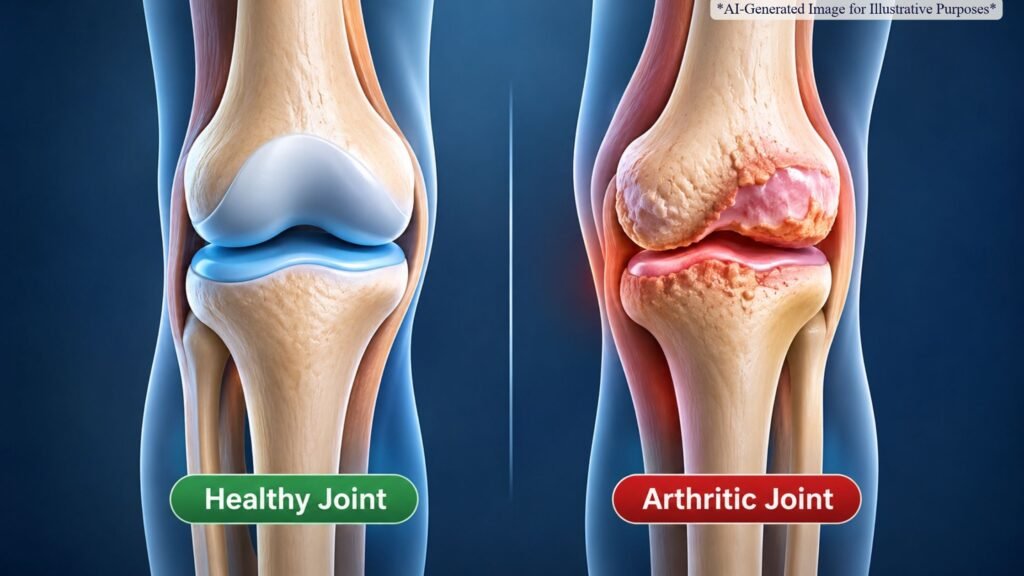
Joint pain is a symptom, not a disease. It describes discomfort in or around a joint.
Arthritis, on the other hand, refers to conditions that affect the joints and can cause pain, stiffness, swelling and reduced movement.
Muscle strain, tendon problems, injuries and overuse can also cause pain around a joint without arthritis.The important question is whether your discomfort improves with recovery or continues to return and gradually affects your daily activities.
When Is Joint Pain Temporary and Usually Not Arthritis?
Temporary joint discomfort often follows physical activity or unusual strain.
You may experience it after:
- Walking longer than usual.
- Climbing several flights of stairs.
- Exercising after a long break.
- Standing for extended periods.
- Performing repetitive household activities.
Muscle soreness usually affects the muscles around a joint rather than the joint itself. It often develops after physical activity and improves with rest and recovery.
Temporary discomfort generally improves as the affected tissues recover. However, persistent or recurring pain needs medical assessment.Weather changes can also influence how some people experience joint discomfort. However, research has not established weather as a direct cause of arthritis.

What Are the Warning Signs That Joint Pain Could Be Arthritis?
Certain symptoms deserve more attention, particularly when they persist or gradually worsen.
1. Morning Stiffness Lasting More Than 30 Minutes
Pay attention to how your joints feel when you wake up.
Brief stiffness that improves after a few movements can occur for several reasons.
However, morning stiffness lasting longer than 30 minutes may indicate an inflammatory joint condition, particularly when accompanied by swelling and pain in multiple joints.
Osteoarthritis typically causes shorter periods of morning stiffness, often lasting 30 minutes or less.
2. Visible Swelling and Joint Warmth
Look for swelling around your knees, fingers, wrists or ankles.
A joint that appears swollen, feels warm or becomes tender may indicate inflammation.
Rheumatoid arthritis commonly causes these symptoms. Osteoarthritis can also cause swelling, particularly during flare-ups.
A suddenly hot, swollen and severely painful joint, especially with fever, requires urgent medical assessment.
3. Grinding or Cracking Sensations
Do you hear or feel grinding when bending your knees or moving another joint?
This sensation is called crepitus.
It can occur with osteoarthritis because changes in the joint surface may affect smooth movement.
However, occasional painless clicking or cracking does not automatically mean arthritis. Persistent grinding accompanied by pain or reduced movement deserves evaluation.
4. Pain That Keeps Returning
Temporary discomfort generally improves as the affected tissues recover.
Arthritis-related pain may return repeatedly, gradually become more frequent or interfere with everyday activities.
You may notice difficulty climbing stairs, walking, gripping objects or getting up from a chair.These changes deserve attention.

Osteoarthritis vs Rheumatoid Arthritis: What Is the Difference?
Osteoarthritis develops when the structures within a joint gradually change and become damaged. It commonly affects the knees, hips and hands.
Typical symptoms include:
- Pain that increases with activity.
- Stiffness after resting.
- Morning stiffness lasting 30 minutes or less.
- Reduced joint flexibility.
- Occasional swelling.
Rheumatoid arthritis is an autoimmune condition. The immune system mistakenly attacks the lining of the joints, causing inflammation.
Typical symptoms include:
- Pain and swelling in multiple joints.
- Morning stiffness lasting longer than 30 minutes.
- Warm and tender joints.
- Symptoms affecting both sides of the body.
- Fatigue and general weakness.
Early diagnosis matters because rheumatoid arthritis can cause permanent joint damage without appropriate treatment.

Joint Pain vs Arthritis: A Quick Comparison
| Feature | Temporary discomfort | Arthritis |
| Onset | Often after activity | May develop gradually |
| Pain | Often improves with recovery | Can return or progress |
| Morning stiffness | Usually brief | May last longer |
| Swelling | Usually absent | May be present |
| Joint warmth | Usually absent | May occur |
| Movement | Often improves with recovery | May become restricted |
These are common patterns, not diagnostic rules. Symptoms can overlap.

When Should You See an Orthopaedic Doctor?
Do not ignore joint pain that:
- Persists or repeatedly returns.
- Causes morning stiffness lasting more than 30 minutes.
- Comes with visible swelling or warmth.
- Makes walking or everyday activities difficult.
- Gradually reduces your joint movement.
- Interferes with your sleep.
I recommend an early assessment rather than waiting for the pain to become severe.Your doctor may evaluate your symptoms, examine the affected joint and recommend X-rays, blood tests or other investigations when necessary.

How Can You Protect Your Joint Health?
You can take several steps to support your joints:
- Maintain a healthy body weight.
- Stay physically active.
- Strengthen the muscles around your joints.
- Avoid sudden increases in physical activity.
- Allow adequate recovery after physical strain.
- Follow a balanced diet.
- Avoid repeatedly taking painkillers without medical advice.
Frequently Asked Questions
1. Is joint pain normal after 40?
Joint discomfort may become more common with age, but persistent pain should not be considered a normal part of ageing.
2. Does morning stiffness always mean arthritis?
No. Brief stiffness can occur after inactivity. However, stiffness lasting longer than 30 minutes, particularly with swelling, deserves medical assessment.
3. Can arthritis pain come and go?
Yes. Osteoarthritis and rheumatoid arthritis can both cause fluctuating symptoms.
4. Can you have arthritis without swelling?
Yes. Some people experience joint pain and stiffness without obvious swelling, particularly in the early stages of osteoarthritis.
5. When should I worry about joint pain?
Seek medical advice when pain persists, repeatedly returns, causes prolonged stiffness or affects your daily activities.